Chicago Cultural Center: How a Public Library Became the People's Palace
October 27, 2026
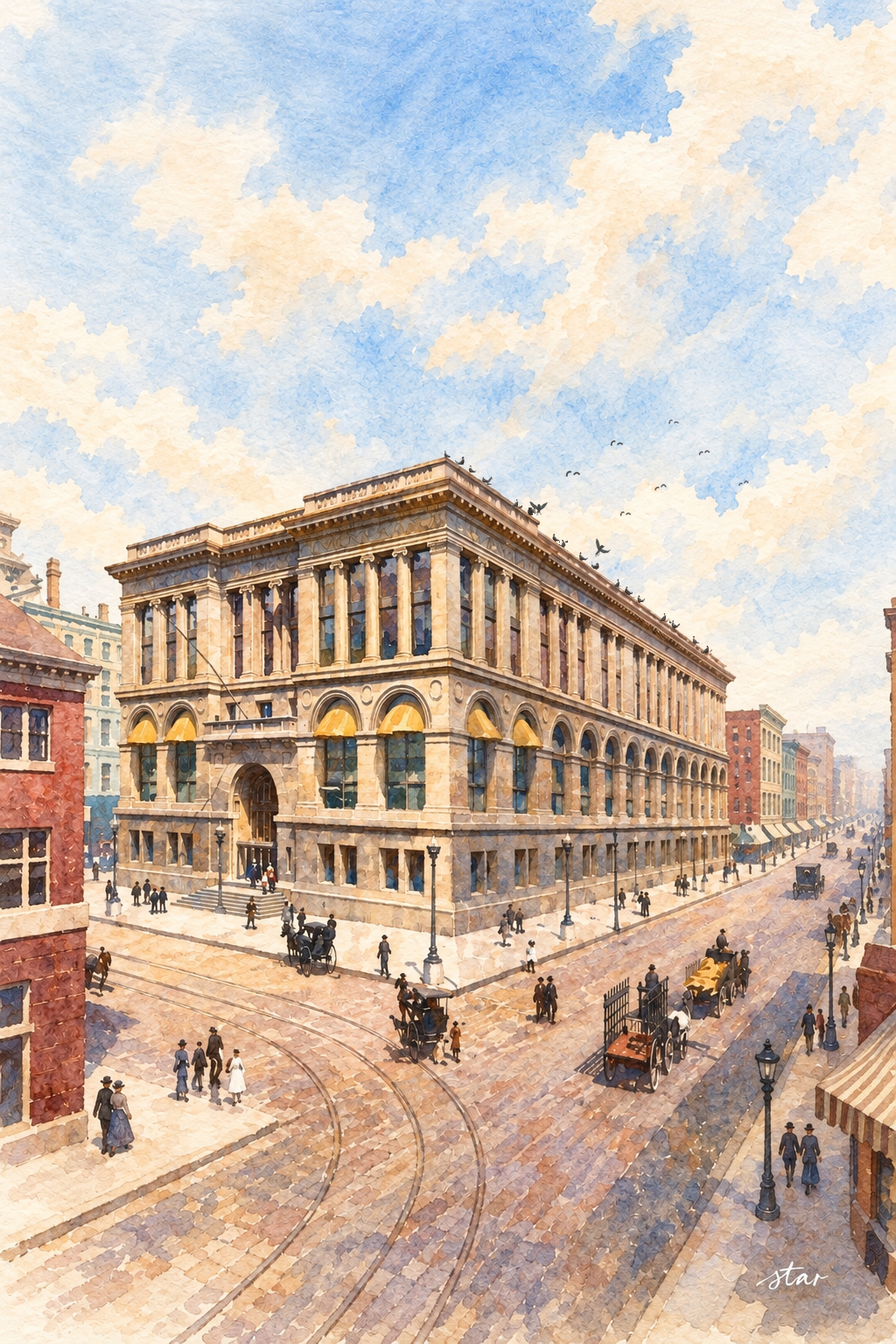
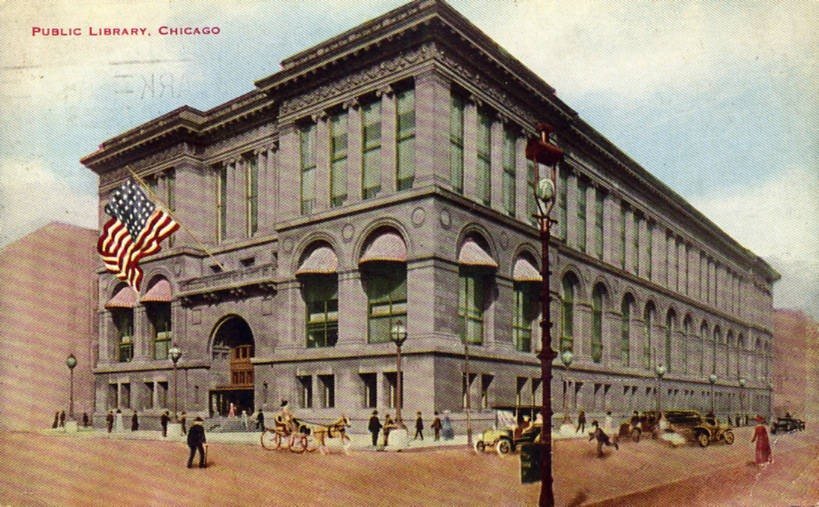
The Chicago Cultural Center is easy to mistake for a building designed primarily to astonish. Its marble staircases, glass mosaics and stained-glass domes make an immediate impression. Yet the reason for that richness is more interesting than decoration alone. When it opened in 1897, this was Chicago's central public library and a memorial to Civil War veterans. Its materials gave permanent architectural weight to two public ambitions: access to learning and remembrance of service.
The library came before the palace
Chicago Public Library's institutional history begins with books rather than with this building. After the Great Fire of 1871, an English donation of more than 8,000 volumes helped encourage a campaign for a free public library. The library was established in 1872 and opened in January 1873 in a surviving circular water tank at LaSalle and Adams. It subsequently moved several times, including a long stay in City Hall.
That beginning makes the 1897 building more than a sudden display of civic wealth. A public collection had spent decades adapting to borrowed or inadequate quarters. A purpose-built central library could organize circulation, reading and storage around its own needs. It could also announce that the institution was permanent. In a city still shaped by memories of the fire, permanence was a technical matter as well as a civic statement: the library's history says the designers sought a practically incombustible building.
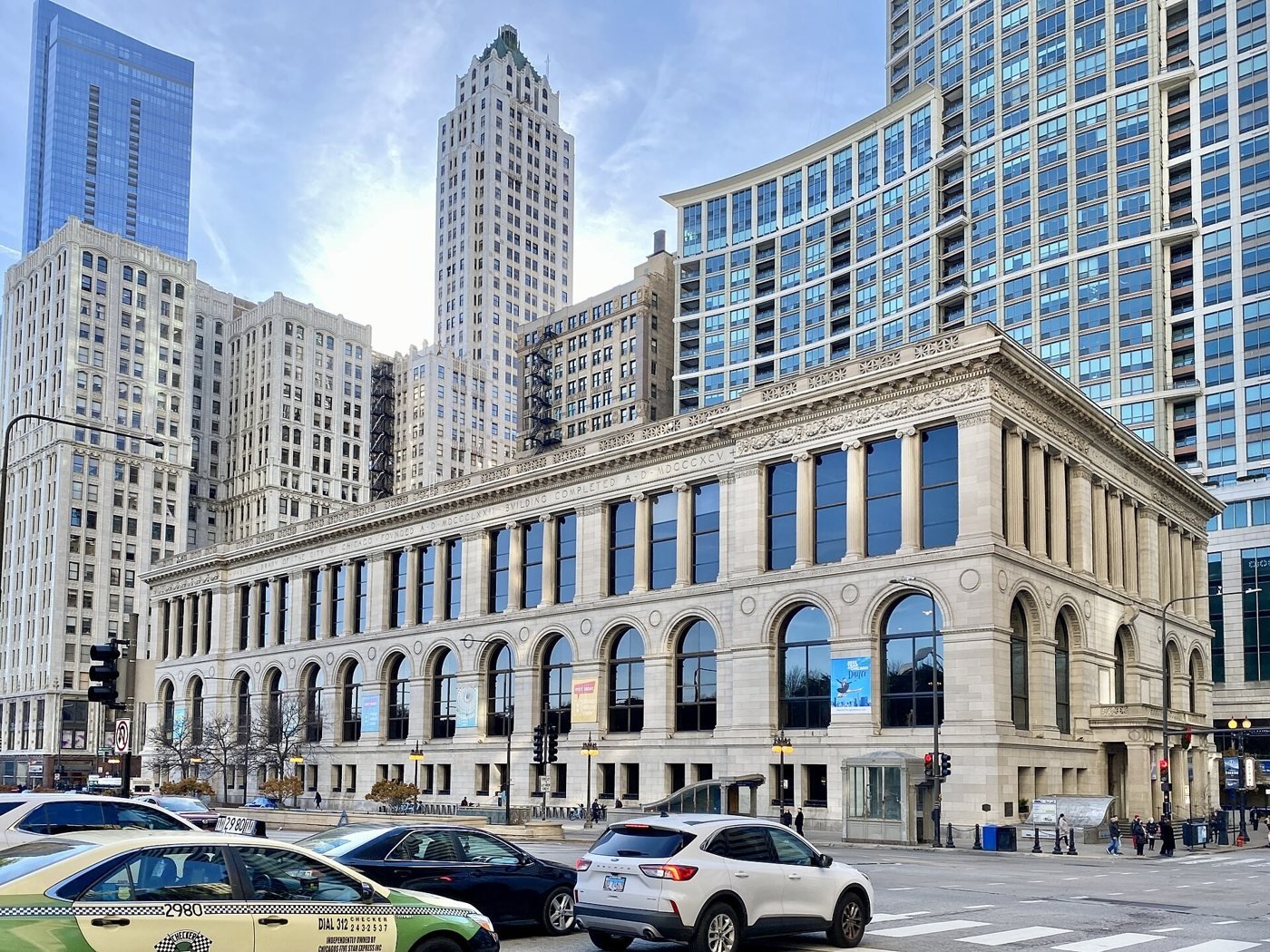
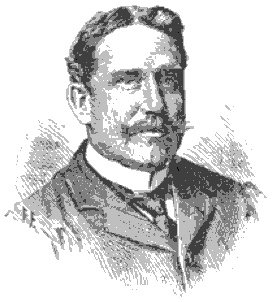
The new library opened on October 11, 1897, on Michigan Avenue between Washington and Randolph streets. Shepley, Rutan & Coolidge designed it, with Charles A. Coolidge identified by the city's dome history as the supervising architect. The cost was about $2 million. That investment produced a building whose public rooms were meant to be used, not reserved for an owner's private household or an exclusive club. Its monumental appearance belonged to an institution intended to admit the public.
Why a war memorial shares the building
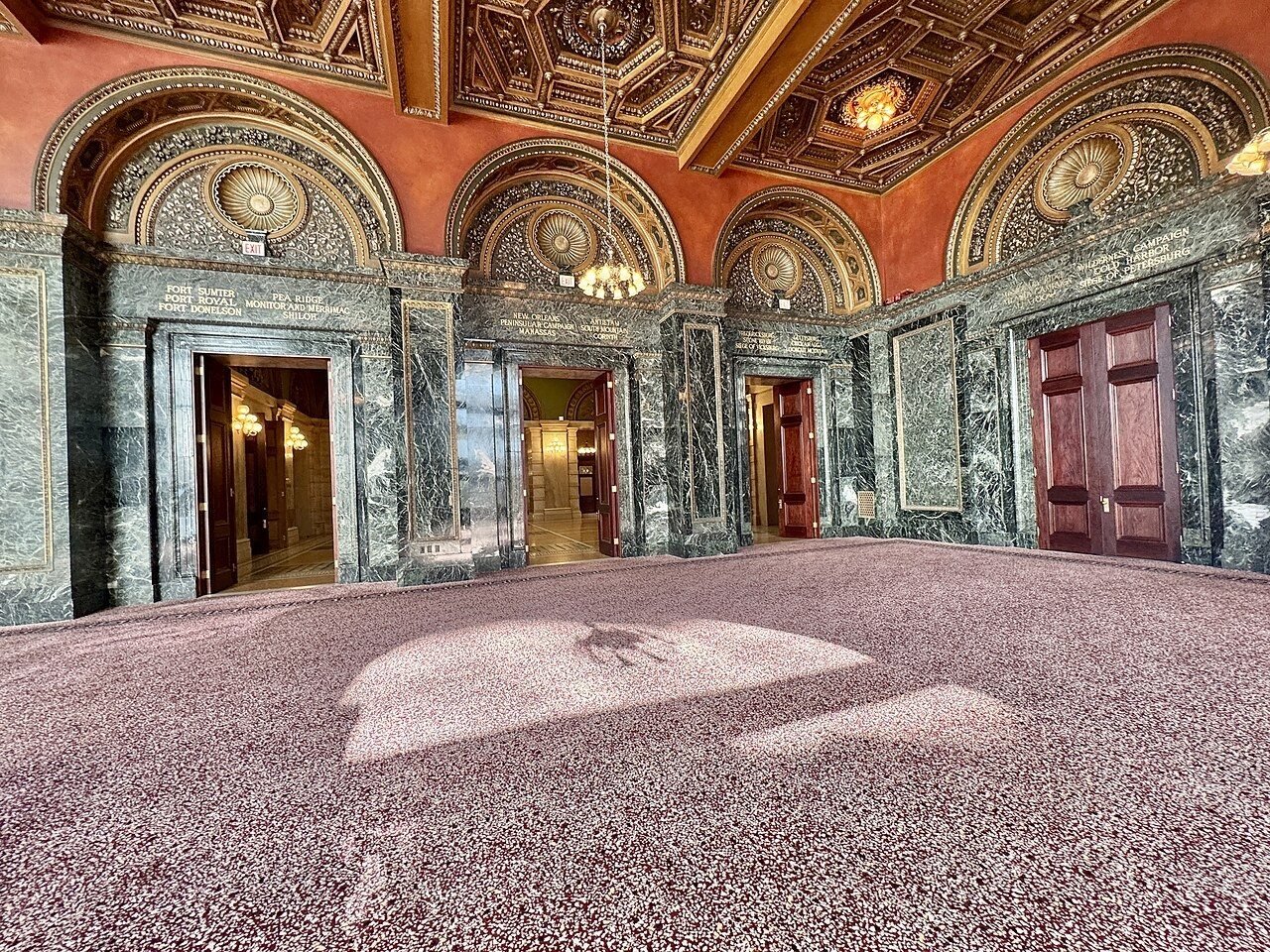
The site at Dearborn Park was sought by both the library and the Grand Army of the Republic, the organization of Union veterans. Chicago Public Library's account of the opening-day collection describes the compromise: the library could build, but space would be provided for a veterans' memorial hall and meetings. This arrangement explains a feature that otherwise can seem puzzling to a visitor moving between the building's two elaborate domed interiors.
The southern rooms celebrate books and learning. The northern G.A.R. spaces address military memory. Those purposes are connected by their public character, but they are not identical. The memorial hall's battle names and former artifact cases belong to a specific history of the Civil War and its veterans. Reading every richly decorated room simply as a library interior would erase the agreement that made the building possible.
A room where books were handed to readers
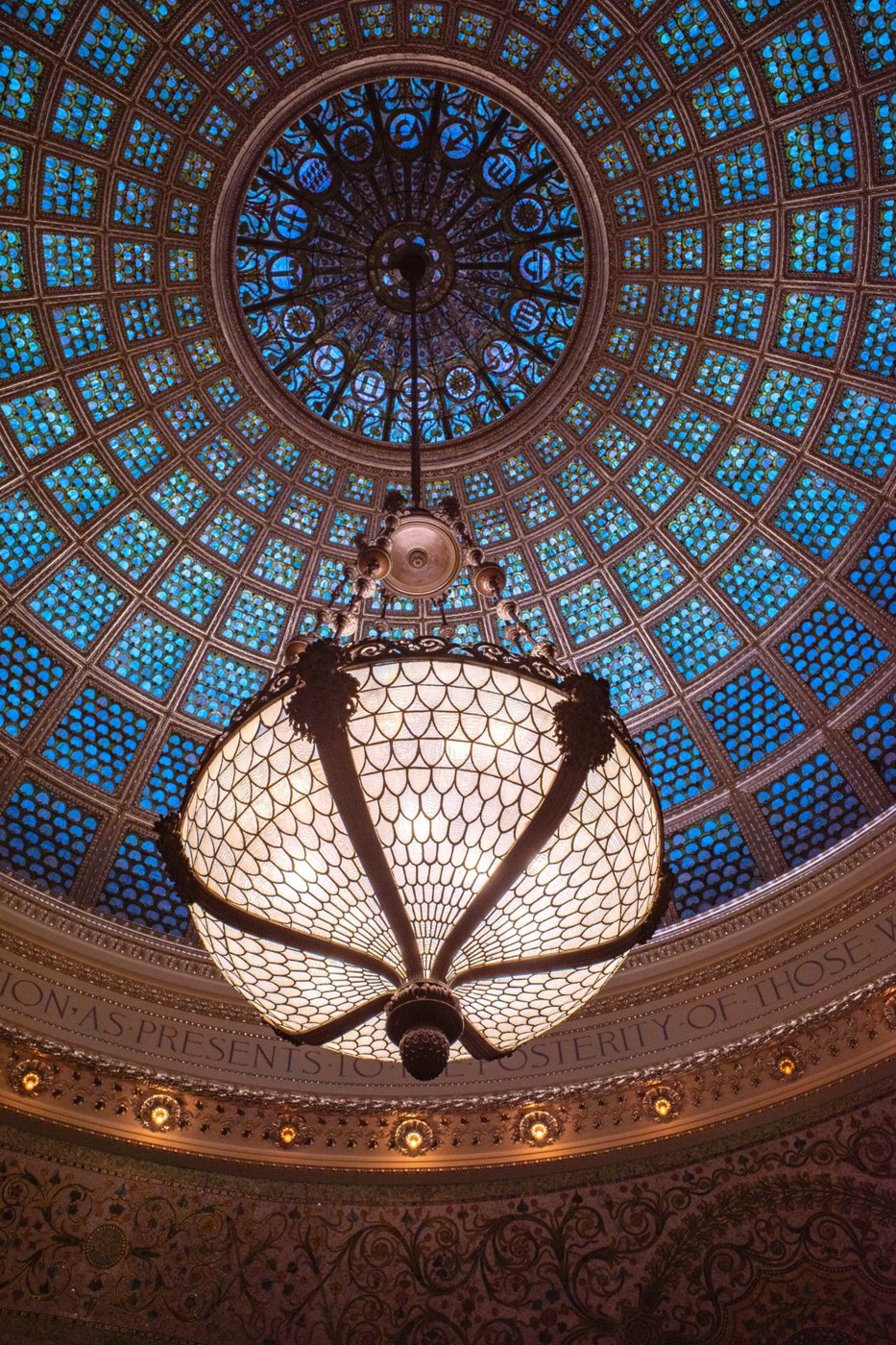
The space now called Preston Bradley Hall was originally where requested volumes were delivered to library patrons. That everyday transaction took place under an extraordinary ceiling. The Tiffany Glass and Decorating Company supplied the 38-foot-diameter glass dome, along with lighting and mosaics. The dome's support was made by the Chicago Ornamental Iron Company. The city's history describes approximately 30,000 pieces of glass assembled into 243 sections.
The fish-scale glass pattern and zodiac around the center make the ceiling worth studying at several distances. From the room below, the overall geometry is clear. In closer views, the changing colors and small divisions reveal how the larger surface is built from individual pieces. This is not a painted imitation of daylight. Transmitted light is part of the material itself, so changes outside affect the appearance of the room.
The mosaics around the hall extend the same idea of learning into the walls. Authors' names, printers' marks and inscriptions appear among marble, colored glass and mother-of-pearl. They are more than a luxurious border. The room turns the production and transmission of books into visible subject matter. A library visitor did not need to recognize every language or symbol to understand the larger message: knowledge belonged in a place cared for as seriously as a civic monument.
The makers behind the name Tiffany
The famous surname can obscure the number of people involved. The city's account identifies the Women's Glass Cutting Department, led by Clara Driscoll, as responsible for fabricating glasswork and mosaics in the company's New York studio. It also distinguishes Coolidge's overall interior direction from the finish and detailed work of Tiffany's company. The room was a coordinated production, not the isolated gesture of one celebrated designer.
Bringing daylight back to the south dome
The Tiffany dome seen today is the result of major conservation. During the 1930s, a concrete-and-copper outer covering was added above it. The city's restoration account explains that this covering was removed during the project completed in 2008 and replaced with a translucent, energy-efficient enclosure. Natural light could again pass through the art glass rather than leaving the dome dependent on artificial illumination.
Restoration required taking out panels, disassembling them, cleaning individual glass pieces, making repairs and renewing the leading before reinstallation. The cast-iron frame received its original aluminum-leaf finish again, and surrounding lighting was refurbished. These operations show why conservation is not the same thing as giving a room a general cleaning. The work depended on understanding the original construction and on repairing many separate elements without losing the overall pattern.
The north dome has its own restoration story
The G.A.R. rotunda has a larger, 40-foot-diameter dome, associated with Healy & Millet. Its restoration was completed in 2022. The city's account describes removing a later opaque cover, repairing the glass and returning natural illumination under a new clear protective enclosure. It also records the survival of original frame finishes beneath accumulated dirt. The project recovered information as well as appearance.
In the adjoining hall, restored cherry cases, Vermont marble and the battle names preserve the room's memorial purpose. Historic artifacts once displayed there are now held at the Harold Washington Library Center. Missing chandeliers were reconstructed using photographs and drawings, computer modeling and new casting. This is a useful reminder that a convincing historic room may include carefully documented replacement pieces, not only objects that have remained in place since opening day.
Official city pages disagree over the north dome's glass count: a general history says about 50,000 pieces, while the restoration page says 62,000. Its size, distinct identity and conservation history are better established than a single uncontested piece count. The difference does not change what a visitor can see, but it is a reason to avoid turning a disputed number into the defining fact of the room.
A change of use without abandoning the public
The move from library to cultural center was a process, not one clean overnight conversion. Chicago Public Library's collection introduction describes renovation and reopening as a cultural center in 1977. The city's present architectural history dates establishment under the Department of Cultural Affairs to 1991. That was also the year library functions moved to the new Harold Washington Library Center. Keeping those milestones separate makes more sense than treating the two dates as interchangeable.
Visiting
The address is 78 East Washington Street. The official city visitor page lists daily building hours of 10 a.m.-5 p.m., with exhibition galleries closing 15 minutes earlier. Admission is free and tickets are not required for the building or exhibitions. Holiday closures and private events can affect access to individual rooms. The city currently lists free public tours on Thursdays and Fridays at 1:15 p.m.; confirm the schedule and check in at the Randolph Street desk. Tours have limited capacity.
Washington/Wabash on the elevated lines and Lake on the Red Line are nearby options. Do not confuse Lake subway station with the State/Lake elevated stop: CTA says State/Lake is closed for reconstruction into 2029 and directs elevated passengers to Clark/Lake or Washington/Wabash. The city visitor page and CTA station notices were checked November 9, 2026. The roof used in a film is not advertised as a public observation deck.
Famous movies with scenes shot at this building
The Untouchables (1987) used the Cultural Center for the opera-house lobby, courthouse lobby and rooftop chase, according to the shot-by-shot specialist location guide itsfilmedthere.com. Chicago Movie Tours independently identifies the rooftop view in which Eliot Ness, played by Kevin Costner, looks down after the fictional death of Frank Nitti, played by Billy Drago. The Cultural Center is playing a courthouse in that sequence; it was not the actual courthouse for Capone's trial.
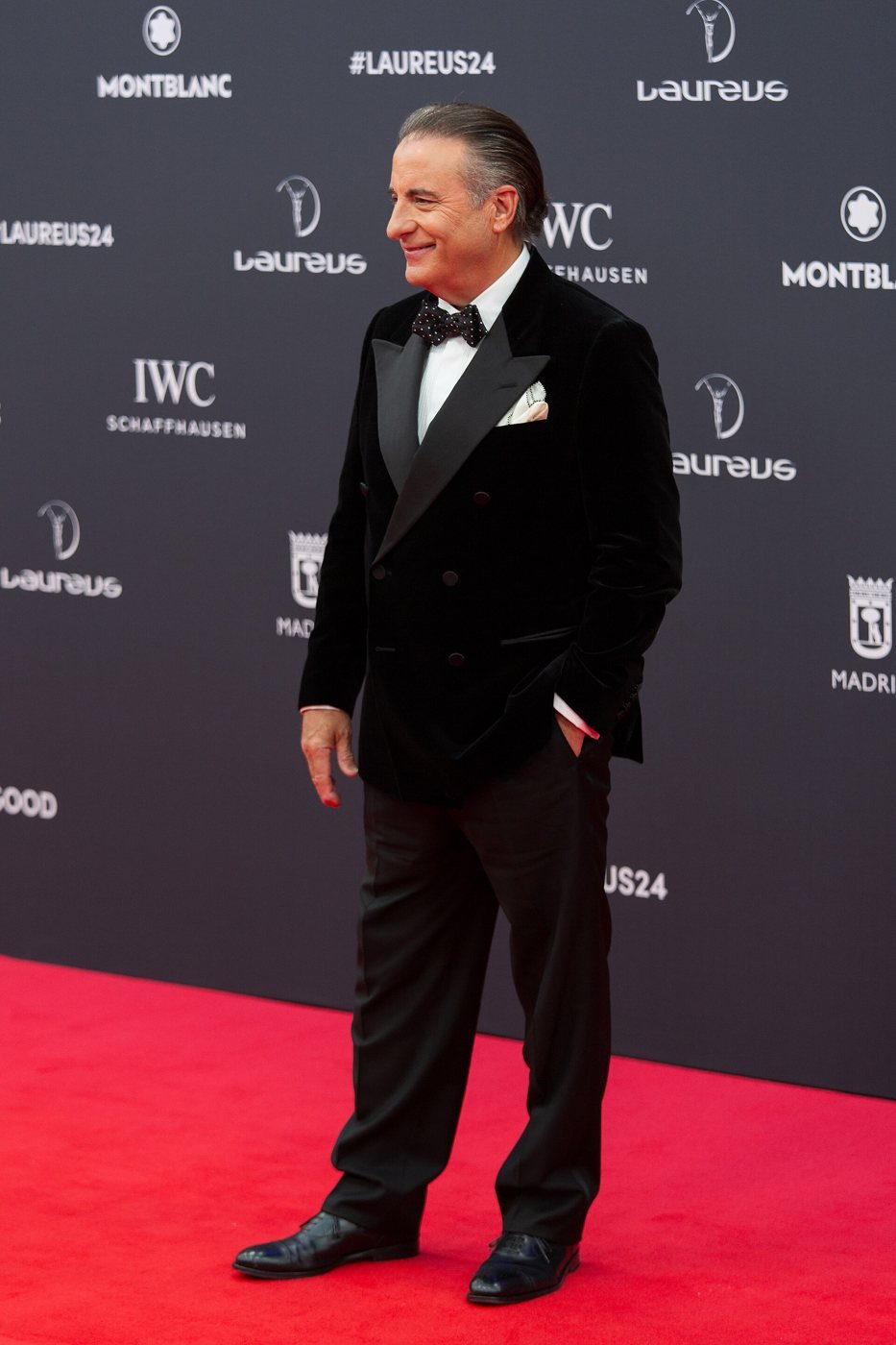
The opera sequence joins different locations. The shot-by-shot guide places Capone in the opera lobby at the Cultural Center but places the actual opera-box scene at the Chicago Theatre. The Andy Garcia portrait is a 2024 red-carpet photograph of the actor who played George Stone, not a scene still or a photograph taken here.
These are documented filming connections, not evidence that Al Capone or Frank Nitti operated from the library building. No separate building-specific organized-crime connection was established in the targeted research, so a factual gangster section is not invented from the movie plot.
Who owns the Chicago Cultural Center today?
The Chicago Cultural Center is a City of Chicago municipal venue managed by the Department of Cultural Affairs and Special Events, or DCASE. The city's current private-events page expressly identifies DCASE as manager and SPAAN Tech, Inc. as the office operating private events on its behalf. Those operating roles are distinct from ownership. A former county-assessor mailing label was not treated as a new deed or title search.
The public-library and cultural-center history supports describing this as a city-owned building; the exact current recorded legal-title entry has not been independently re-examined. Ownership and management descriptions were reviewed November 9, 2026. A visitor can rely on the city's venue information, but a transaction would need a current title record rather than an article or tax label.
Where can you eat or drink at the Chicago Cultural Center?
The current city visitor page does not establish an operating public restaurant or bar inside the building. Old references to the Randolph Cafe do not establish current service, and a private-event caterer is not a public cafe. Confirm food-and-drink rules before bringing refreshments into galleries or event rooms.
A verified nearby option is Intelligentsia's Millennium Park Coffeebar at 53 East Randolph Street, outside the Cultural Center. Its direct page lists Monday-Sunday hours of 6:30 a.m.-7 p.m. and telephone 312-920-9332. Address and hours were checked November 9, 2026; confirm holiday service before going.
Sources
- City of Chicago: Architecture and History
- City of Chicago: Preston Bradley Hall Tiffany Dome
- City of Chicago: G.A.R. Hall and Rotunda
- Chicago Public Library: CPL History
- Chicago Public Library: Cultural Center Opening Day Collection
- City of Chicago: Chicago Cultural Center
- Intelligentsia: Millennium Park Coffeebar
- City of Chicago: Cultural Center private events (DCASE manages the building)
- City of Chicago: Cultural Center history
- itsfilmedthere.com: The Untouchables
- City of Chicago: current visitor information
- Chicago Movie Tours: rooftop scene in The Untouchables
- CTA: State/Lake elevated reconstruction closure
- CTA: Lake Red Line subway station
- Commission of Fine Arts: Charles A. Coolidge biography