The Chicago Theatre: How a 1921 Movie Palace Became the City's Marquee
October 29, 2026
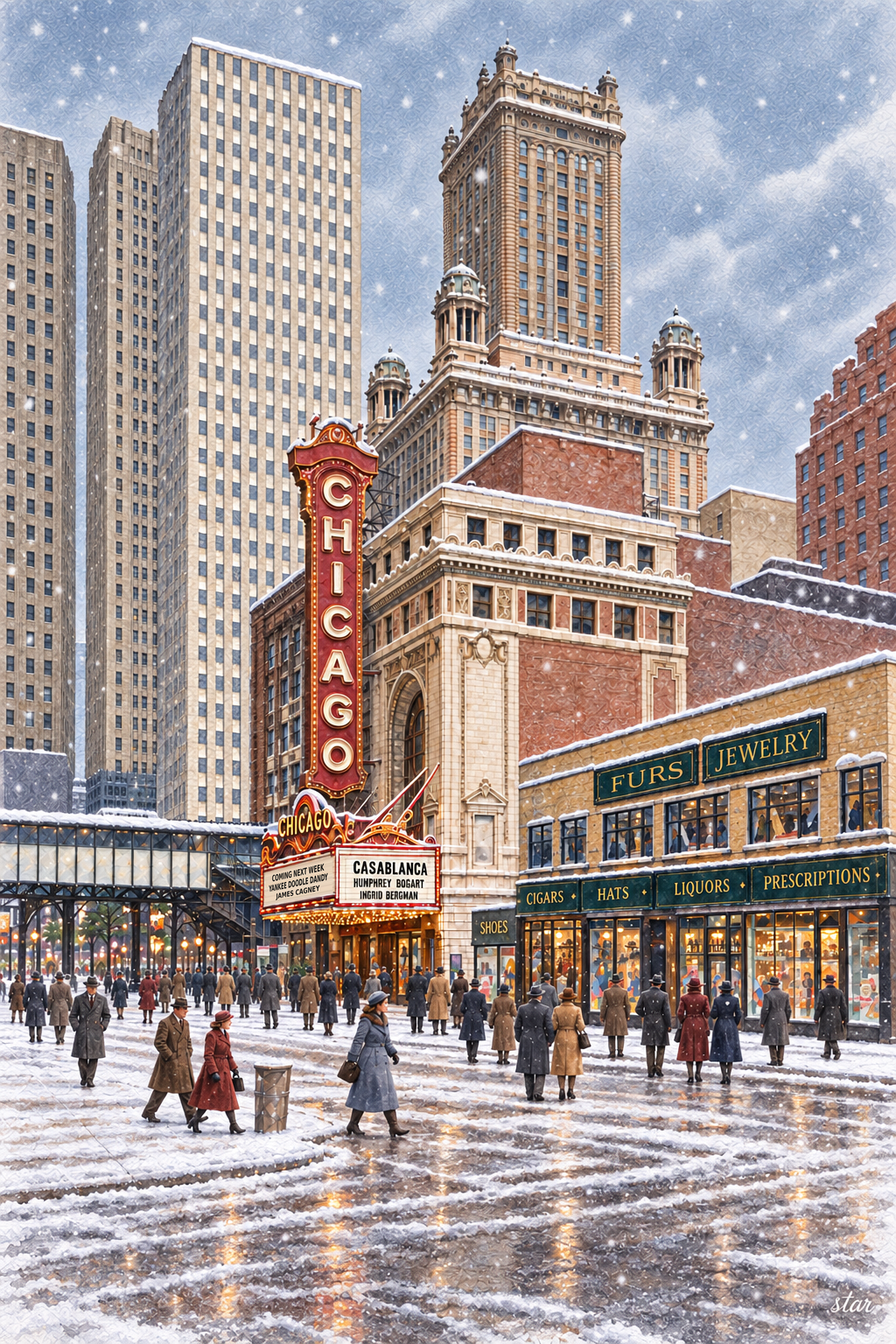
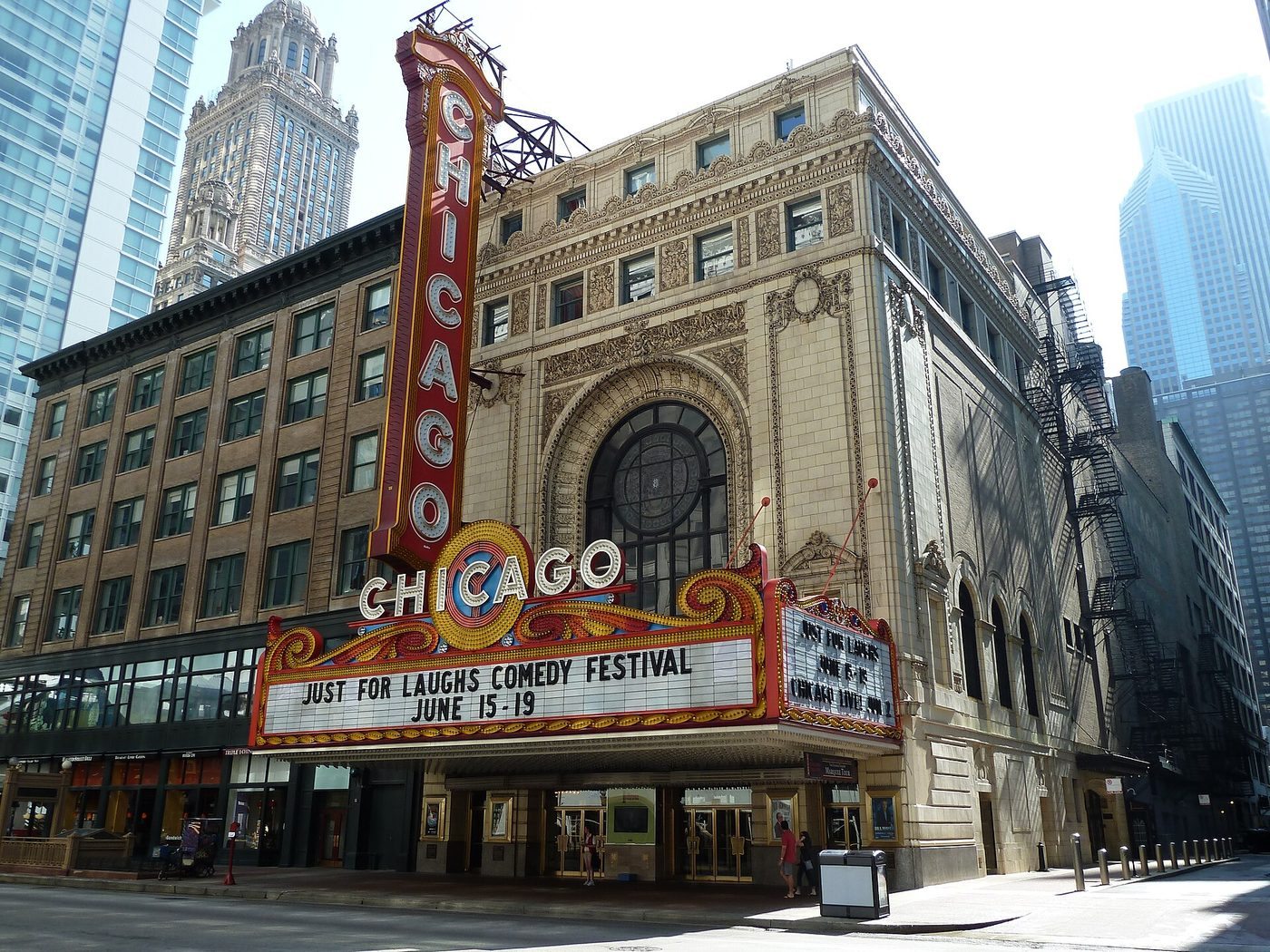
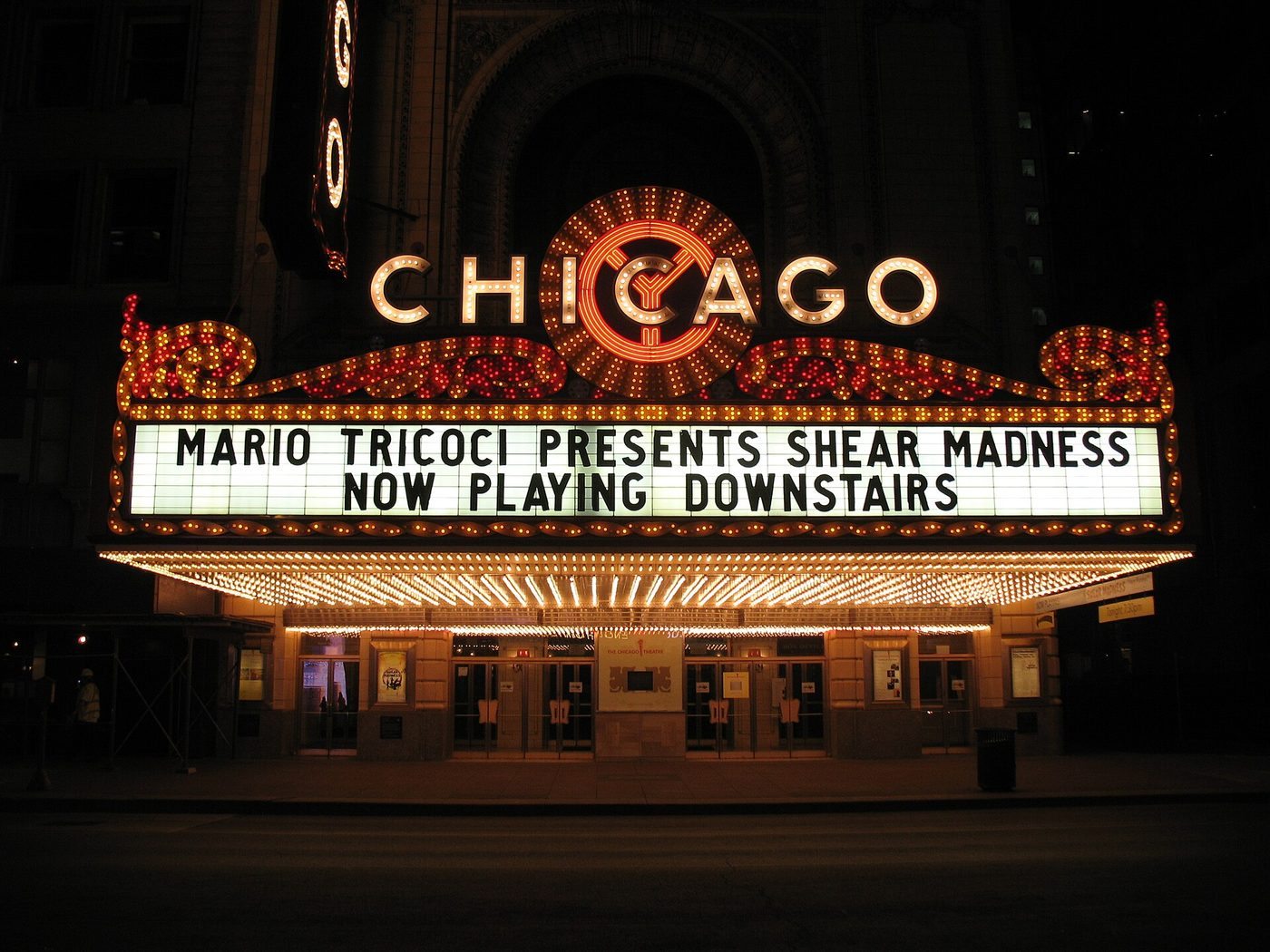
Seven stories of cream terra cotta stand on North State Street under a six-story arch, and in front of it hangs the vertical CHICAGO sign that has become one of the city's best-known pictures. The Chicago Theatre opened on October 26, 1921, as the flagship of the Balaban and Katz movie theater chain. It is one of the earliest surviving grand movie palaces, and it now books concerts, comedy and stage shows for a capacity of 3,553 before production-related seat removals on the current official rental page. The familiar rounded 3,600 figure is not an exact seating guarantee.
It is owned today by the company that owns Madison Square Garden, and its ownership has changed hands more than once since the 1980s.
The Wonder Theatre of the World
Abe and Barney Balaban and Sam and Morris Katz built the theater as the showpiece for their chain, which grew to 28 theaters in Chicago and more than 100 others in the Midwest. The architects were Cornelius and George Rapp, who also designed the Oriental and Uptown theaters, and the final cost was $4 million. The Balaban and Katz company advertised it as the Wonder Theatre of the World. It opened with 3,880 seats, a 50-piece orchestra, the organist Jesse Crawford at a 26-rank Wurlitzer and a live stage show. The landmark report quotes the poet Carl Sandburg's opening review for the Chicago Daily News, including his description of mounted police managing the crowds.
The theater's formula, a plush building with careful service and one of the first uses of air conditioning, was copied across the country. Jazz was a draw from the beginning, and Balaban and Katz promoted a Syncopation Week as early as September 1922. Ronald Reagan announced his engagement to Jane Wyman at the theater.
Opening week as a complete show
MSG's centennial account identifies the first film as The Sign on the Door, starring Norma Talmadge. It also describes a staff of 125 ushers and admission prices of 25 to 50 cents, depending on the time of day. The film was only one part of the purchase. The orchestra, organ, stage entertainment and ceremonial interior gave patrons a complete outing. This was a silent-film house, where live musicians supplied sound before synchronized dialogue became routine.
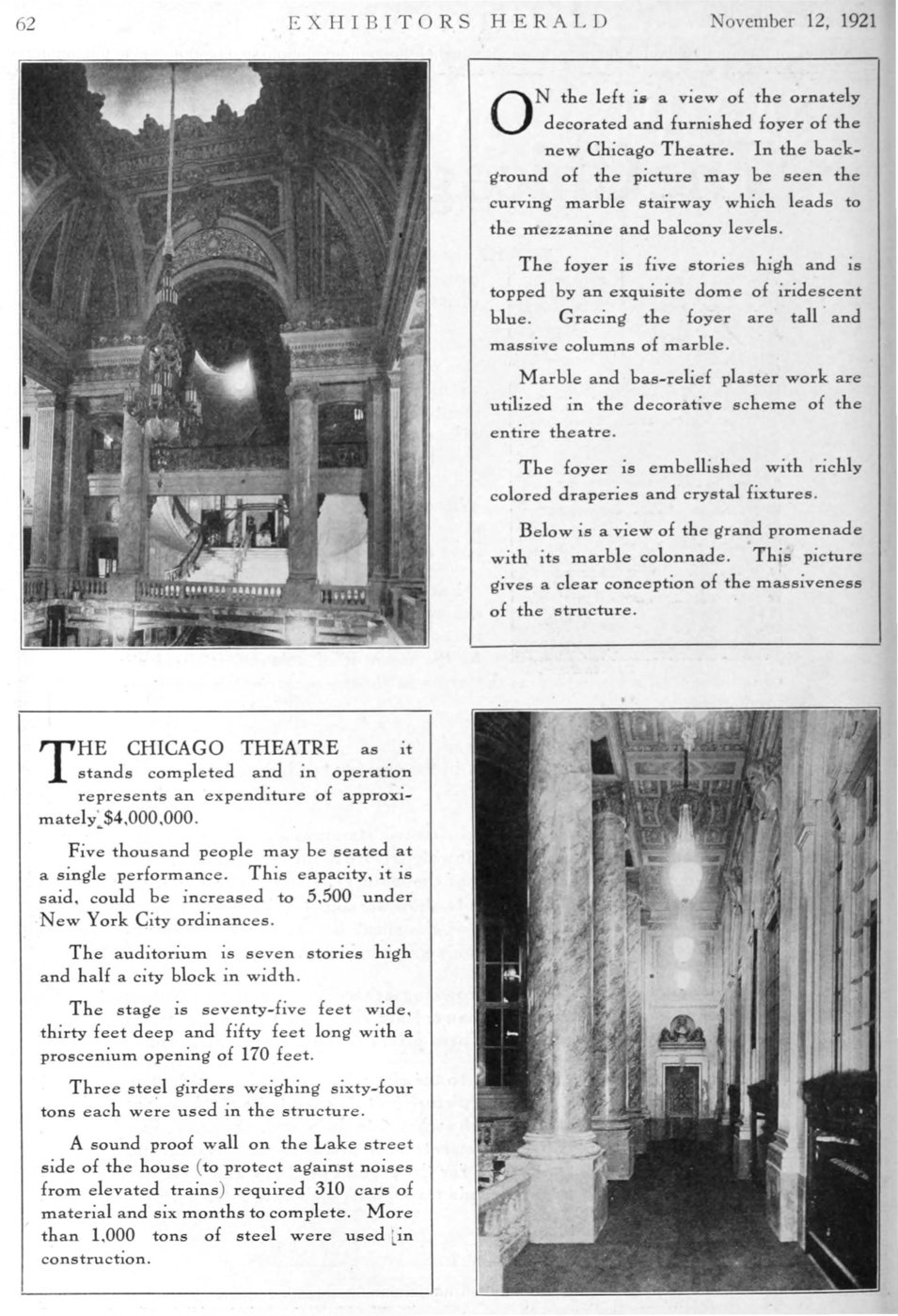
A November 12, 1921 Exhibitors Herald feature documents the new building with photographs of the foyer, promenade, auditorium and stair. Its language is promotional, and its claim of 5,000 seats should not be substituted for a modern capacity. What the pages do show is how carefully the building was presented as an experience: marble columns, layered promenades, lighting effects and circulation were central to the coverage. The historical page reproduced below preserves both the photographs and their original context.
Rapp and Rapp's French palace
The exterior is off-white architectural terra cotta from the Northwestern Terra Cotta Company, with neo-Baroque stucco by the McNulty Brothers. The State Street front is a triumphal arch 60 feet wide and six stories tall, which writers have compared to the Arc de Triomphe. A round Tiffany stained glass window inside the arch holds the Balaban and Katz coat of arms, two horses holding ribbons of 35mm film in their mouths.
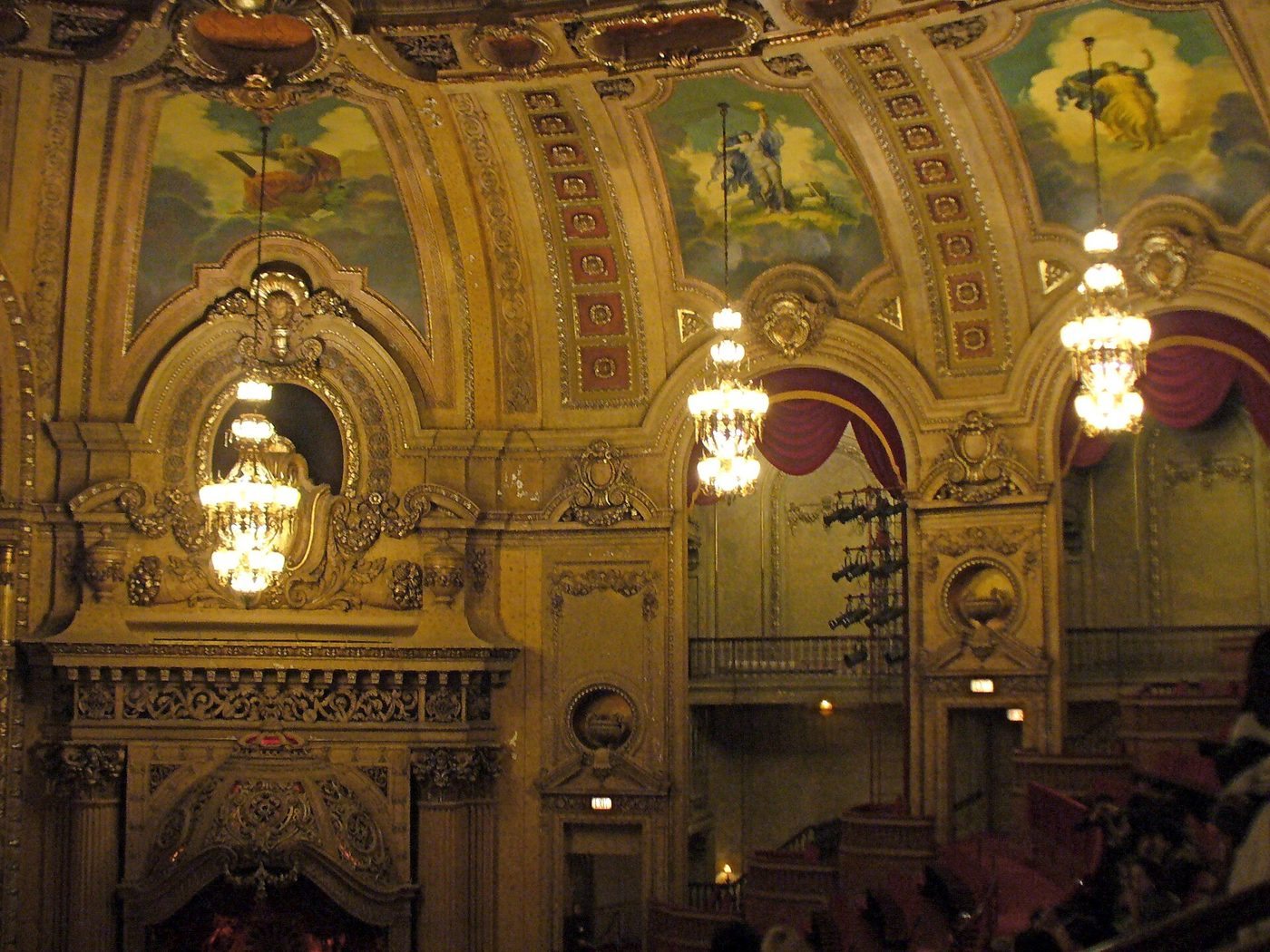
Inside, the five-story grand lobby was modeled on the Royal Chapel at Versailles, and the grand staircase follows the one at the Paris Opera House. Marshall Field and Company supplied the drapes and furniture. Victor Pearlman and Company built the crystal chandeliers and the bronze fixtures with Steuben glass shades.
A building fitted around a corner
The landmark report describes an L-shaped plan wrapped around the adjoining Loop End Building, now called the Page Brothers Building. The theatre's main entrance is on State Street, while its much larger auditorium occupies the interior of the block. Above the monumental street front was the smaller rehearsal and preview theatre nicknamed the Little Chicago. The apparent palace frontage therefore does not tell the whole story of the working spaces behind it.
The same report describes the grand promenade behind the auditorium and a sequence of intermediate balcony levels reached by the main stair. The 1921 trade account adds practical engineering to that decorative story: a substantial soundproof wall on Lake Street was intended to keep elevated-train noise out. It also describes a board at the manager's desk controlling temperature, ventilation and lighting. The spectacle depended on backstage labor and building systems as well as on plasterwork and chandeliers.
The murals
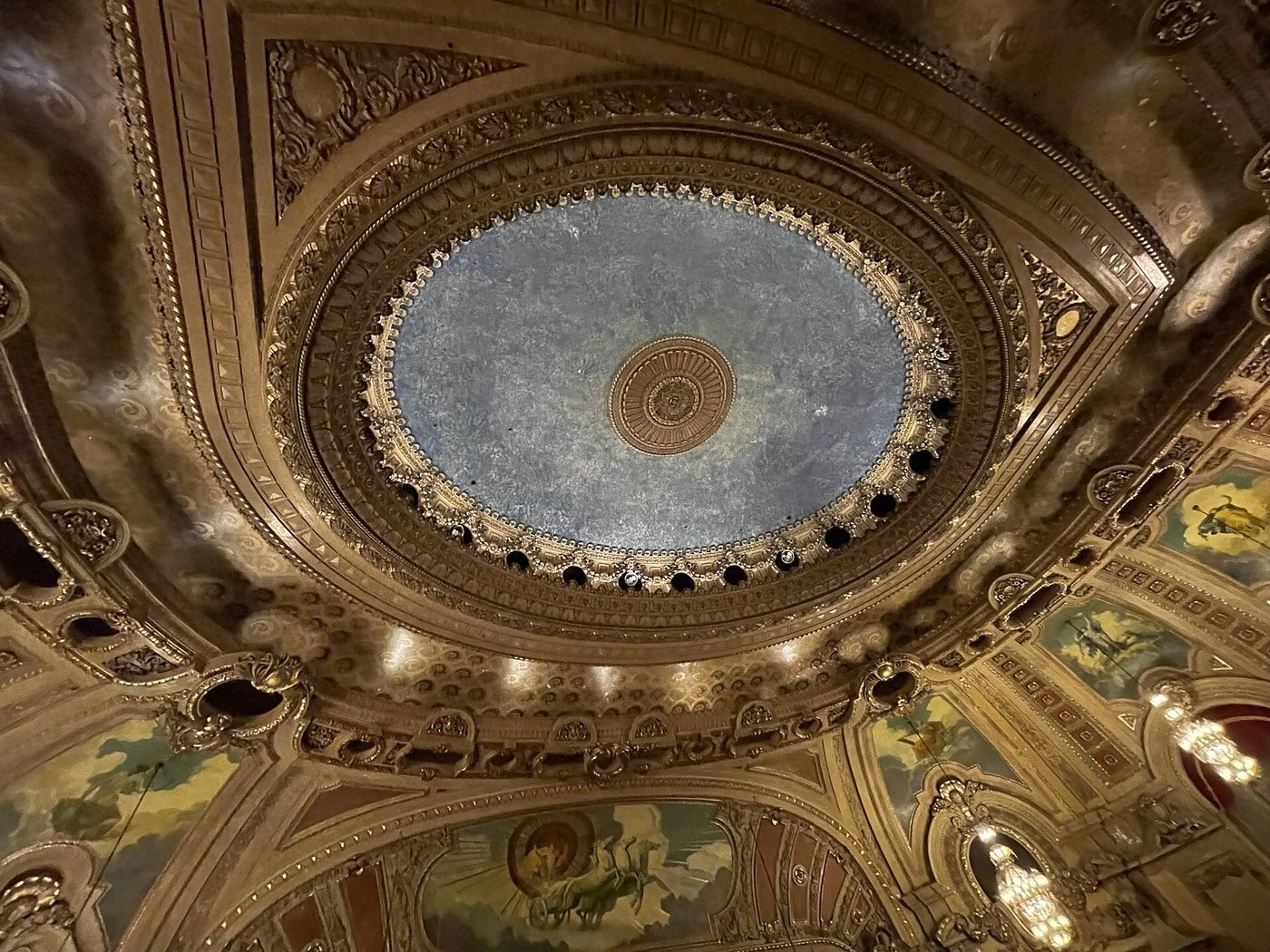
The original decoration had 14 large French-themed murals around the proscenium by the Chicago painter Louis Grell. Before the 1933 World's Fair, Balaban and Katz had Grell repaint them, this time with Greek and Roman gods. Those are the oil-on-canvas murals that are in the auditorium today.
Decline, near loss and restoration
The stage shows ended in the 1950s, and by the 1970s the theater, owned by Plitt Theatres, was struggling. Wikipedia reports the producer Lou Volpano reopened it for two winter weekends of live shows in 1983, with performers including Liza Minnelli, Bob Hope and Sarah Vaughan. In 1984 the Chicago Theatre Preservation Group bought the theater and the neighboring Page Brothers Building for $11.5 million. The group tried to keep it as a movie house, and the theater closed on September 19, 1985.
The restoration took about $9 million, with $4.3 million of that spent on the theater itself. The architects returned the auditorium to a 1930s look and reduced seating to 3,600. Frank Sinatra headlined the reopening on September 10, 1986. The Landmarks Preservation Council of Illinois had championed the four-year effort.
The marquee
The Y-shaped figure behind the word CHICAGO on the marquee is the city's municipal device, which stands for the forked Chicago River. The theater has had several marquees. The 1949 replacement was similar to the 1922 version, with larger attraction boards, and the whole thing was replaced in 1994 while keeping the earlier look. The original marquee was given to the Smithsonian Institution in 2004. In 2011 a Chase Bank logotype was added to the vertical sign, which the sale terms set by the city allowed.
The building was listed on the National Register of Historic Places on June 6, 1979, and became a Chicago Landmark on January 28, 1983.
Visiting the Chicago Theatre
The theatre is at 175 North State Street. The official Chicago Theatre Tour Experience describes a 60-75-minute guided visit to the lobby, auditorium and backstage areas. Content can change; stage and dressing-room access are excluded on concert days, and photography restrictions may apply. A calendar message saying no tours for the selected month does not prove that tours have ended. Use the official calendar and its Ticketmaster links for an actual available date.
The box office FAQ, opened and checked November 9, 2026, gives standard hours Monday-Friday noon-6 p.m. Central, closed Saturday-Sunday except for on-sales and events. On event days it remains open until one hour after the show begins; weekend event opening is two hours before event doors. Additional hours may vary. The venue is cashless and accepts cards or mobile payment, with a reverse ATM inside.
CTA's Lake Red Line subway station at 188 North State Street is nearby. The adjacent State/Lake elevated station is a different stop and is closed for reconstruction into 2029, according to CTA. Elevated-line passengers should use Clark/Lake or Washington/Wabash instead and check current alerts. Construction may affect pedestrian routes. A ticket or guided tour provides the appropriate access; this is not a freely open architectural museum.
In the movies
The location records identify real spaces playing different fictional roles. For The Untouchables (1987), itsfilmedthere.com places scenes of Capone's Lexington Hotel on the theatre's red stairs and his opera visit in a mezzanine box. The real Lexington Hotel was a different building. The theatre location therefore documents a film shoot, not evidence that Capone held court in this building.
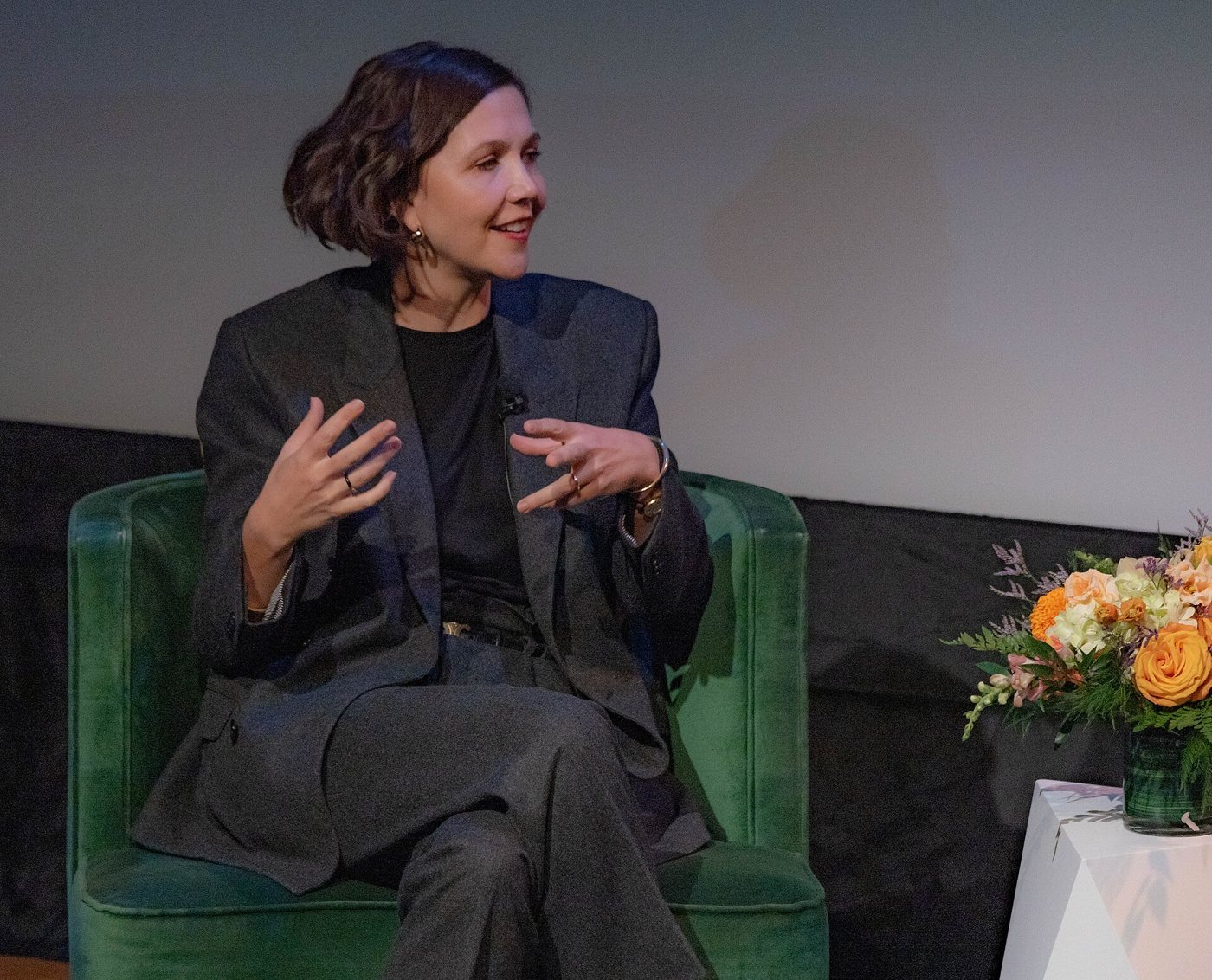
For The Dark Knight (2008), movie-locations.com identifies the Chicago Theatre when Harvey Dent and Rachel Dawes arrive for a ballet that has been cancelled after Bruce Wayne takes the company on a cruise. The Maggie Gyllenhaal portrait is a 2021 photograph of the actor who played Rachel, not a still of that scene. Keeping the actor image separate from location evidence avoids suggesting that a modern portrait documents the shoot.
Who owns the Chicago Theatre today?
Madison Square Garden Entertainment Corp.'s fiscal 2026 SEC financial statement says the company owns The Garden, the Infosys Theater at Madison Square Garden and The Chicago Theatre, while leasing Radio City Music Hall and the Beacon Theatre. This newer filing replaces the fiscal 2025 report used in an earlier version. It establishes the corporate ownership statement, not the exact deed-holding subsidiary.
MSG's centennial account dates its acquisition of the theatre to 2007. Its current company page includes Chicago in its venue portfolio. The present MSG Entertainment became a separate publicly traded company in April 2023, according to the SEC filing; an old reference to the MSG name should not erase those later corporate changes. The precise title entity and whether the adjoining Page Brothers property is held in the same entity remain unverified. Sources checked November 9, 2026.
Where can you eat or drink at the Chicago Theatre?
The theatre's own food-and-drink page lists popcorn, theatre candy, soft drinks, water, beer, wine and cocktails. Its FAQ confirms food and beverages for purchase and cashless payment. These are venue concessions, not a public sit-down restaurant with a separate daily dining schedule. The food page contains some generic Madison Square Garden alcohol-policy text referring to sports periods; that is not used here as a Chicago Theatre service timetable.
The FAQ says outside food and beverages, including sealed cans and bottles, are not allowed. Clear, soft-plastic empty bottles are permitted, and water fountains are available. Guests with medical needs should contact Guest Relations before the event. Event-specific rules can change, so check the theatre's current information before attending.
For a separate meal nearby, Petterino's is at 150 North Dearborn Street, rather than inside the theatre. Its own page lists Monday 11 a.m.-9 p.m., Tuesday-Saturday 11 a.m.-10 p.m., Sunday 11 a.m.-8 p.m.; closing times vary with nearby performances and holidays. Call 312-422-0150 to confirm. Direct dining and FAQ sources were checked November 9, 2026.
Sources
- Wikipedia: Chicago Theatre
- Madison Square Garden Entertainment Corp. annual report, fiscal 2025 (SEC)
- MSG Entertainment: The Chicago Theatre tour
- MSG Entertainment: The Chicago Theatre FAQs
- GoChicago: The Chicago Theatre
- Petterino's: hours
- Petterino's: reservations
- itsfilmedthere.com: The Untouchables
- movie-locations.com: The Dark Knight
- MSG: centennial opening history
- Commission on Chicago Landmarks: Chicago Theatre report
- Chicago Architecture Center: Chicago Theatre
- Exhibitors Herald: opening feature, November 12, 1921
- MSG fiscal 2026 SEC statement: ownership and corporate history
- MSG: official venue rental capacity
- MSG: official concession menu
- CTA: Lake Red Line station
- CTA: State/Lake elevated closure