Navy Pier: From Municipal Pier to the People's Pier
November 1, 2026
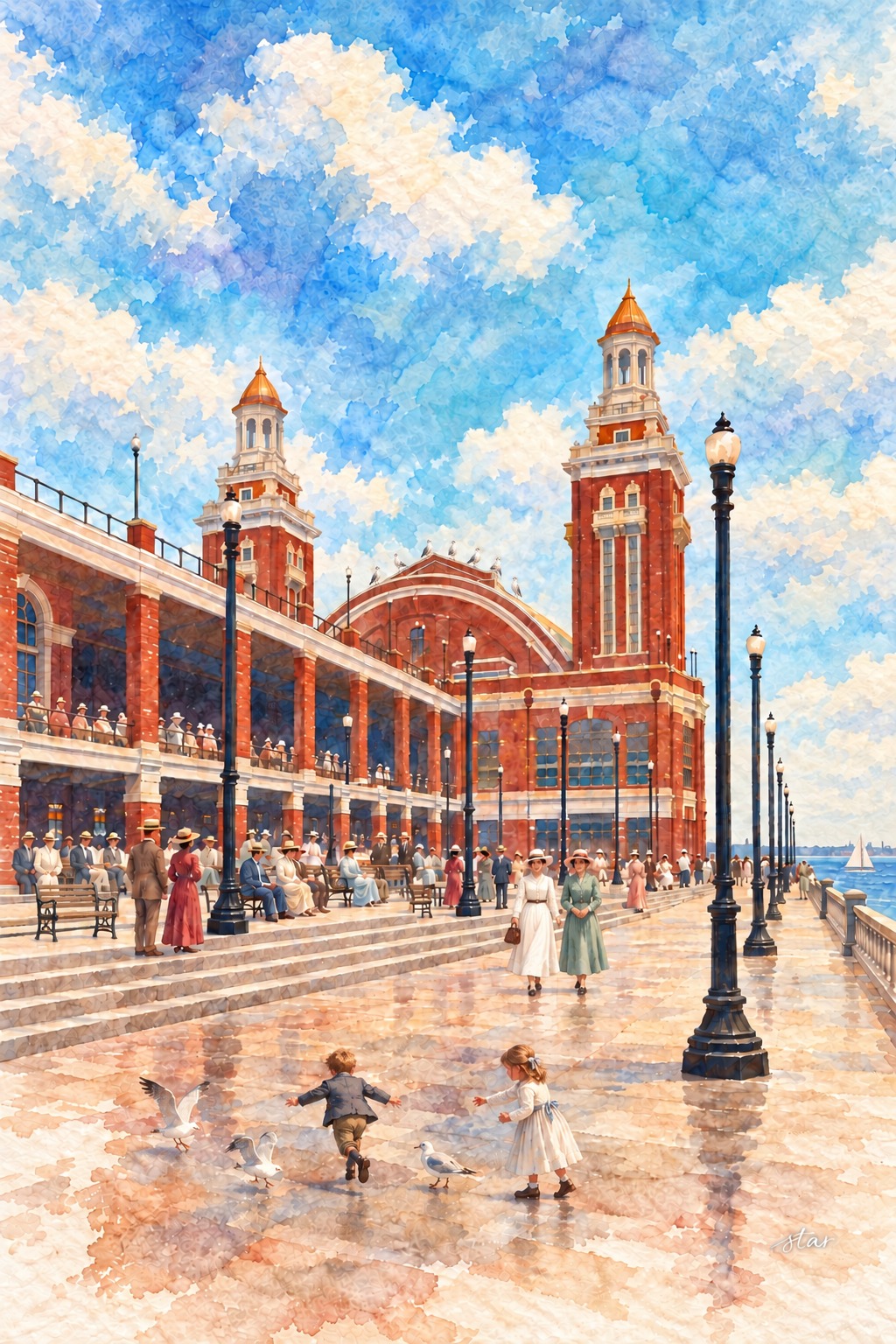
Navy Pier extends 3,300 feet into Lake Michigan from the foot of Grand Avenue. Its 50-acre mix of public walks, theaters, restaurants, boat docks and amusements is the latest use of a piece of working infrastructure opened on July 15, 1916. It was first Municipal Pier, then a naval training base, then a university campus, and eventually the attraction rebuilt in 1995. The site's history is more interesting than a single annual visitor number: an old record of more than nine million visits is not a certified count for 2026.
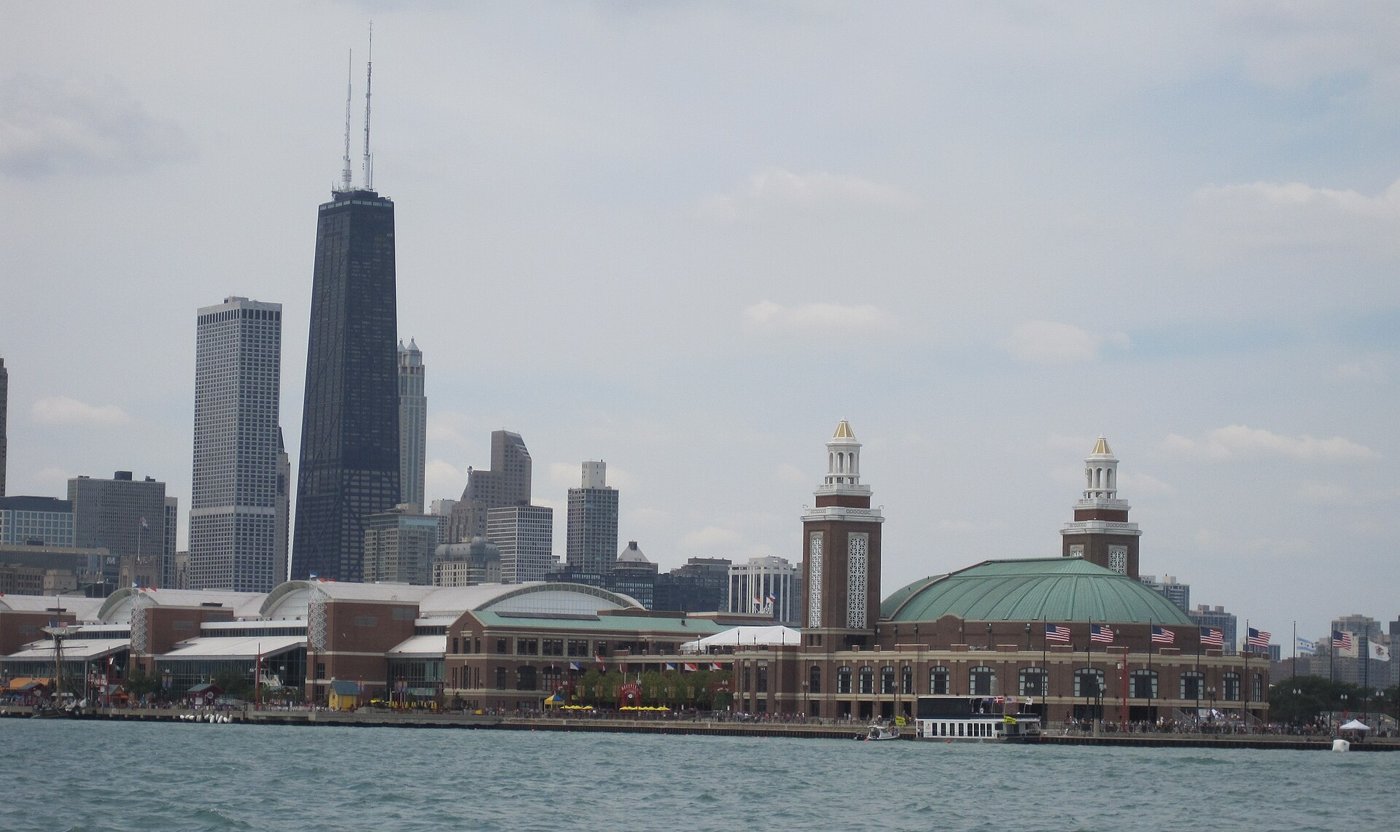
Burnham's pier
Daniel Burnham and Edward Bennett's 1909 Plan of Chicago imagined lakefront piers as places for both commerce and public recreation. Architect Charles Sumner Frost and engineer E. C. Shankland turned that ambition into this long structure. Accounts describe some 20,000 Oregon timber piles driven into the lakebed. That foundation made a platform where ships could load while residents escaped the heat. Warehouses, passenger steamers, exposition halls and open-air pleasure were not incompatible uses in the original scheme. The pier belongs to Chicago's infrastructure history as much as to its entertainment history.
During World War I, the pier served military purposes; historical accounts also describe detention of draft evaders in 1918. The city renamed it Navy Pier in 1927 to honor naval personnel associated with the war. That name predates the much larger naval operation of World War II. It is easy to compress the two wars into one story, but the sequence is important: the municipal pier existed first, received its naval name later, and then became a major training center.
Reading the architecture
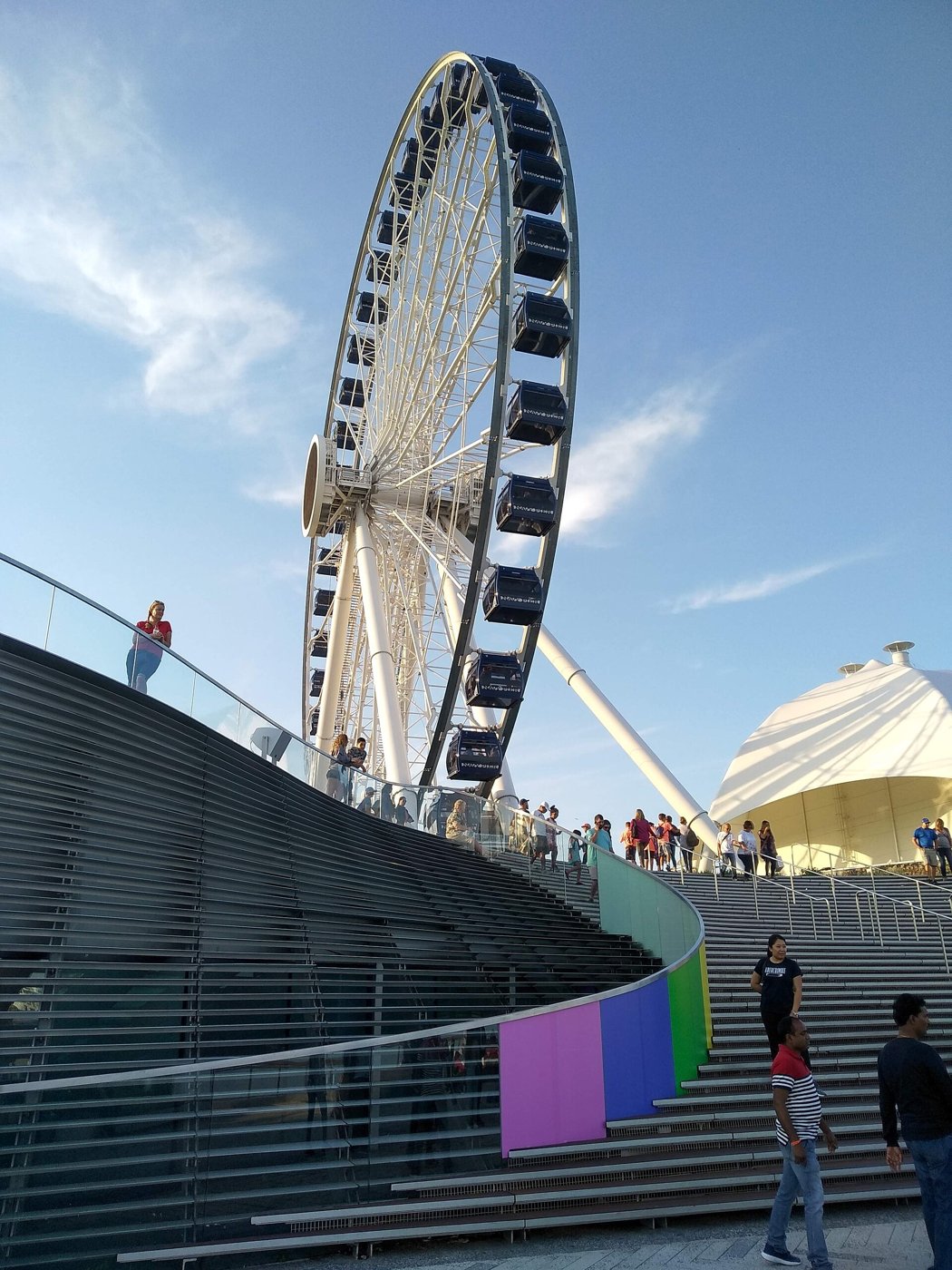
The architecture has two scales. From the city, the broad headhouse gives the complex a recognizable entrance. Along the lake, the long warehouse and exhibition buildings emphasize its original industrial function. At the outer end, the ballroom and its paired towers give the public walk a destination. The tall wheel belongs to a much later entertainment layer. Reading those parts separately avoids treating an entire waterfront complex as one building with one unchanged architect and date.
War and college
In 1941, Navy Pier became a United States Navy training center. About 10,000 people worked, trained and lived there, supported by a theater, gym, shops, kitchen and hospital. USS Wolverine and USS Sable were converted side-wheel passenger steamers used as training aircraft carriers on Lake Michigan. Historical accounts credit the program with qualifying about 18,000 naval aviators. The flight decks were on the ships, not on the pier itself. This distinction keeps the memorable image of carrier training from becoming a mistaken architectural claim that aircraft landed on the municipal structure.
In 1946, the University of Illinois began holding classes at the pier, responding to the demand for higher education after the war. Returning veterans were central to that first enrollment, but the campus was not merely a brief veterans' program. Its classrooms supported a growing Chicago student body until the university's permanent campus opened at Harrison and Halsted in 1965. The move left the pier needing another purpose. The same spacious buildings that had accommodated training and classes did not automatically become a successful public destination once those institutions departed.
Decline and the 1995 comeback
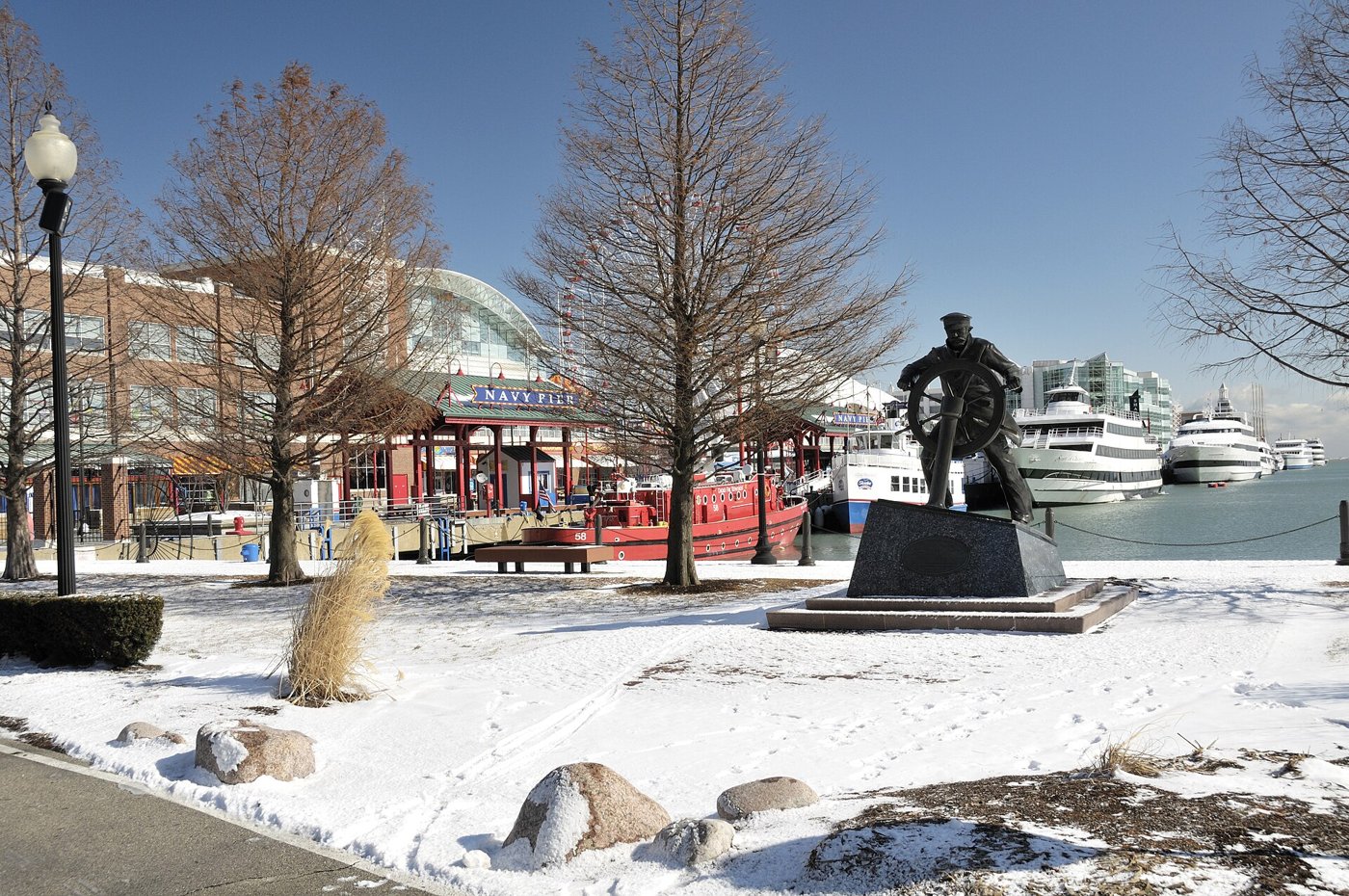
The 1959 opening of the St. Lawrence Seaway gave commercial shipping a temporary lift, but modern freight facilities at Lake Calumet drew traffic away. The east-end buildings were renovated in 1976 and events such as ChicagoFest brought people back, without permanently settling the question of the pier's future. Its National Register listing dates to 1979; the register status was removed in 1992 after later changes. That designation history should not be confused with a claim that every structure standing here today survives unchanged from 1916.
The state created the Metropolitan Pier and Exposition Authority, or MPEA, in 1989 to oversee the pier alongside McCormick Place. A large redevelopment led to the public reopening on July 12, 1995. Restaurants, shops, cultural uses and a Ferris wheel shifted its daily purpose away from freight. The wheel deliberately recalled Chicago's 1893 exposition, but it was not the original fair wheel moved here. Nor is the wheel seen in a 1990s photograph the current Centennial Wheel. The pier's familiar identity is a sequence of replacements and adaptations.
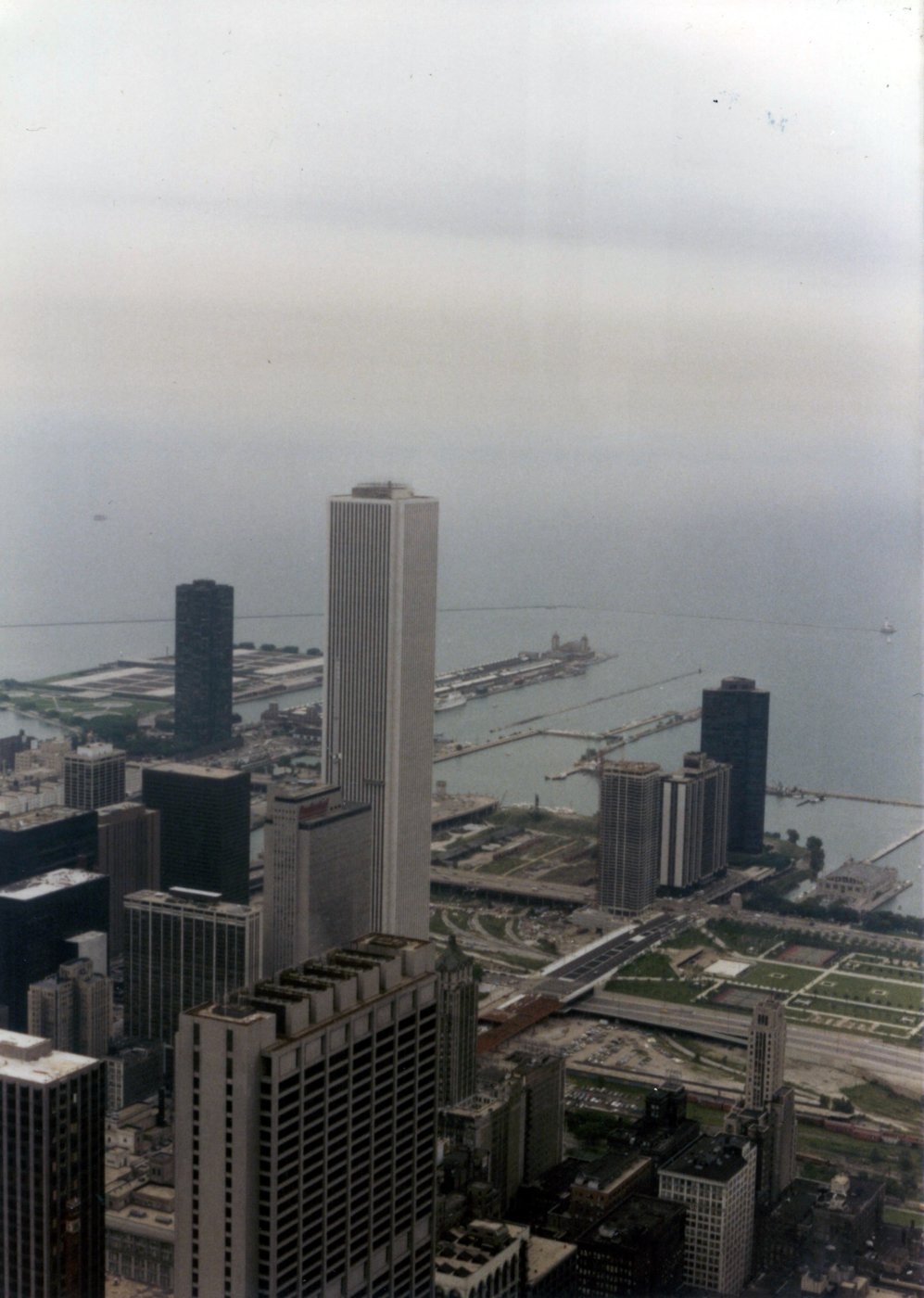
The 1981 photograph from Sears Tower shows the pier before the 1995 reopening and before either modern Ferris wheel. Its distant position in the full scan also explains its relationship to the river mouth and Grant Park. The photograph is retained whole rather than cropped into a misleading isolated detail.
The Centennial Pier
A separate nonprofit, Navy Pier, Inc., took over operations under a lease effective July 1, 2011. James Corner Field Operations was selected in 2012 to lead the Centennial Vision public-space redesign. The 2013 announcement describes a greener South Dock promenade, improved connections and places to pause, with Gensler coordinating interior work as executive architect. Such design announcements contain proposals as well as completed work; their promised projects should not all be described as existing attractions. In May 2016, the 196-foot Centennial Wheel replaced the 1995 wheel, with enclosed gondolas suited to the lakefront climate.
Visiting the pier now
Checked November 9, 2026, the pier's own hours page gives September 8-December 31 hours of 11 a.m.-8 p.m. Sunday-Thursday and 11 a.m.-10 p.m. Friday-Saturday. Entry to the pier is free; the wheel, museums, theaters, cruises and other attractions set their own charges and schedules. Thanksgiving and Christmas Day are closed, and Christmas Eve closes at 5 p.m. The wheel is advertised as open daily, weather permitting, while other Pier Park rides do not operate in winter. A summer fireworks timetable should not be used to promise November shows.
The address is 600 East Grand Avenue. The pier's transit guide lists CTA buses 29, 65, 66 and 124, plus the 2 Hyde Park Express during weekday rush hours. Transfers from rail stations are needed; there is no rail platform on the pier. Accessibility guidance identifies elevators near Doors 2 and 4 for Pier Park, a wheelchair-accessible wheel, and complimentary first-come wheelchairs held against a valid ID. Individual attractions can impose their own ride requirements. The pier also posts a youth escort policy after 5 p.m. Friday-Sunday for guests under 18.
Later additions extend the redevelopment story beyond the centennial. The 223-room Sable hotel and its Lirica restaurant opened in March 2021, according to the pier's contemporary announcement. The Chicago Shakespeare Theater and Chicago Children's Museum remain major cultural names here. Crystal Gardens should not be dismissed as a vanished address simply from older closure coverage: the pier's own October-November 2026 film program placed screenings in that space. That recent use does not establish an unchanged botanical garden or unrestricted daily access. Check the current venue and program rather than relying on an old attraction list.
Famous movies with scenes shot at this building
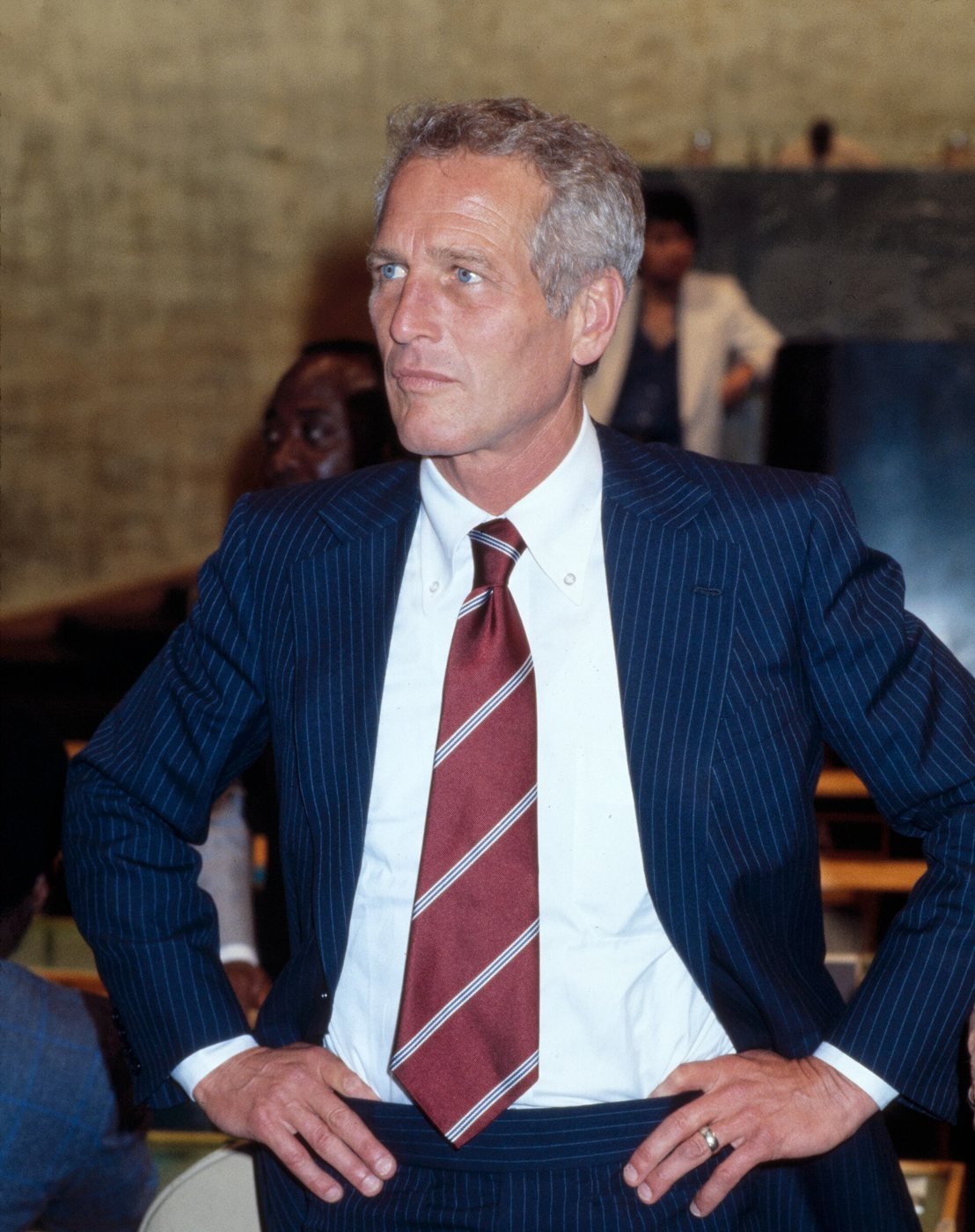
The Color of Money (1986) used the Grand Ballroom as the Atlantic City nine-ball tournament venue. Paul Newman played Fast Eddie Felson opposite Tom Cruise's Vincent Lauria. The fictional tournament location does not mean the scene was shot in New Jersey. Movie-Locations also identifies the Grand Ballroom in Divergent (2014), alongside the pier and its earlier Ferris wheel during capture-the-flag training. That film predates the Centennial Wheel's 2016 opening. The Dark Knight (2008) used the pier for Gotham's ferry evacuation. These are film scenes on a real site, not evidence of real mass evacuations or criminal incidents here.
Who owns Navy Pier today?
The pier remains publicly owned and separately operated. Navy Pier, Inc.'s 2025 audited financial statements, issued May 18, 2026, identify MPEA as owner and the nonprofit as the body managing, operating and redeveloping it. Note B gives the initial lease term as July 1, 2011-June 30, 2036, with four 20-year renewal options. That is a potential 105-year arrangement, not an already exercised 105-year lease. Annual rent is $1, prepaid for the initial term. The statement says MPEA provides no ongoing subsidy for operating the pier. A publicly owned site can therefore depend on commercial income, donations and nonprofit operations without being privately sold.
Where can you eat or drink at Navy Pier?
Harry Caray's Navy Pier branch, near the main entrance at 700 East Grand Avenue, is a practical full-service option. Its direct page lists Sunday-Thursday, 11 a.m.-8 p.m., and Friday-Saturday, 11 a.m.-10 p.m.; telephone 312-527-9700. These hours were checked November 9, 2026. An October 31 special-opening notice on the same page is past, not today's schedule. The branch describes Chicago dishes and sports memorabilia, rather than being interchangeable with the group's River North Italian steakhouse. Paid garage parking is separate from the meal.
Offshore Rooftop is farther east at 1000 East Grand Avenue, Festival Hall Entrance 2. Its direct fall schedule is 11 a.m.-9 p.m. Sunday-Tuesday and Thursday, and 11 a.m.-10 p.m. Wednesday, Friday and Saturday. The last reservation is one hour before closing. It requires physical identification and says digital or mobile IDs are not accepted in 2026. Its Guinness-record marketing concerns a rooftop bar, not the entire pier. Restaurant hours can extend beyond general retail hours, and a private event can close the venue; check the restaurant itself before walking the full length of the pier.
Sources
- Navy Pier: history
- Navy Pier: historical timeline
- Navy Pier: 2025 audited financial statements, Notes A and B
- Navy Pier: current hours and admission
- Navy Pier: accessibility
- Navy Pier: transportation
- Navy Pier: 2013 Centennial Vision announcement
- Navy Pier: Sable opening announcement, 2021
- Navy Pier: 2026 Crystal Gardens film program
- Navy Pier: Centennial Wheel
- Harry Caray: direct branch hours
- Offshore: direct fall hours
- Movie-Locations: Divergent and Grand Ballroom film use
- Movie-Locations: The Dark Knight
- Wikipedia: secondary historical overview