Wrigley Field: The 1914 Ballpark That Outlived Its Own League
November 3, 2026
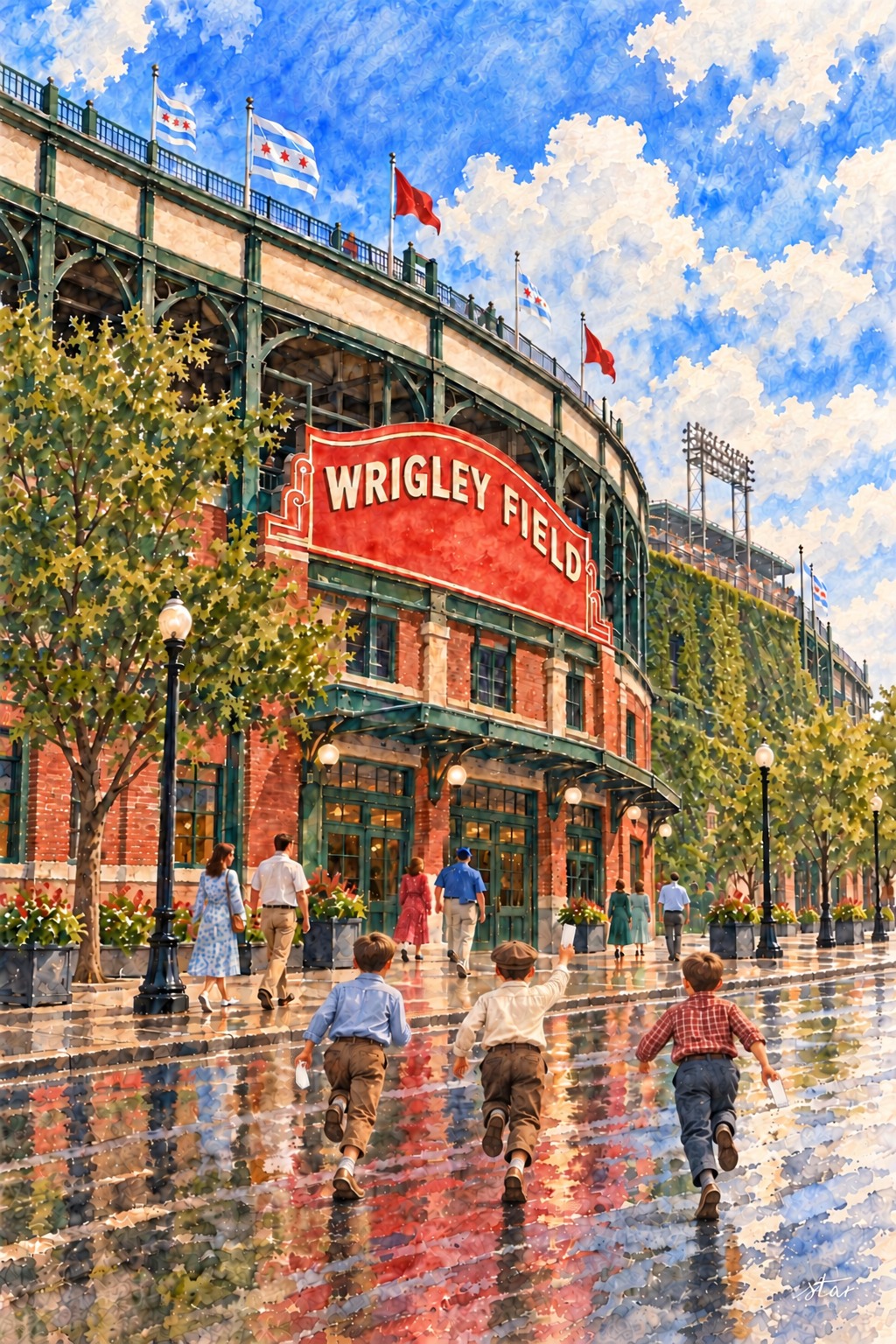
Wrigley Field occupies a tight North Side block, but its history is larger than the Cubs. The ballpark at Clark and Addison opened on April 23, 1914, for a rival league. The Federal League disappeared after the following season; its Chicago ballpark survived, acquired another team and became one of the city's most recognizable public places.
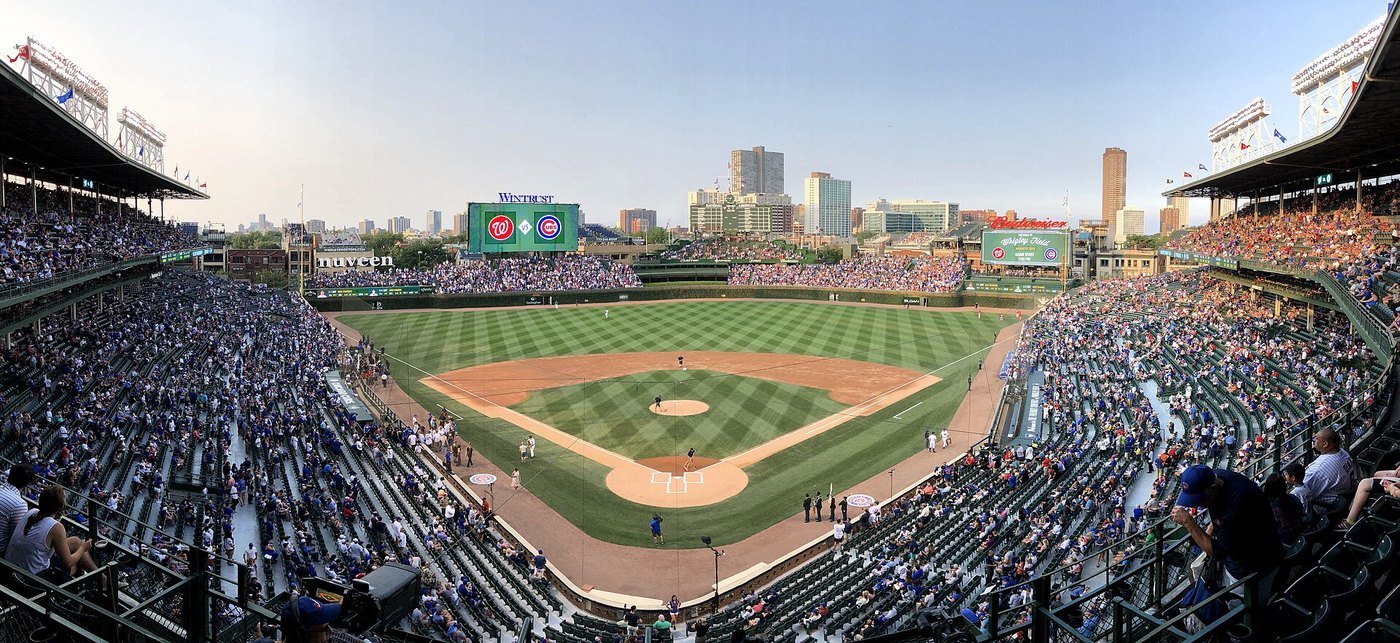
Its appeal lies in the closeness of baseball and neighborhood. Brick walls meet ordinary streets. Apartment buildings beyond the outfield complete the view. Inside, steel columns, a green scoreboard and seasonal ivy give the field an old-fashioned identity, even after extensive modern reconstruction.
A new park for the Federal League
Charles Henry Weeghman made his fortune in lunch-counter restaurants. With partner William Walker, he leased a former theological-seminary site and hired brothers Zachary T. and Charles G. Davis to design a steel-and-concrete ballpark. Zachary had already designed Comiskey Park. The Chicago landmark report credits both brothers at Wrigley, rather than assigning the entire project to Zachary alone.
Construction began in March 1914 and advanced quickly enough for the April opening. The permit listed a $250,000 cost, and the initial capacity was about 14,000. The grandstand followed the playing field in a broad curve, with a roof that gave some spectators shelter while leaving the field open to the sky.
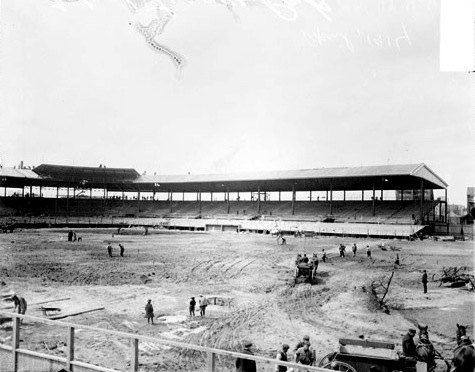
The first club was known as the Chi-Feds or Federals, then renamed the Whales for 1915. That distinction matters: the familiar Whales name does not describe the team throughout both seasons. After the Federal League folded, Weeghman and nine partners bought the Cubs and moved them from the West Side Grounds. On April 20, 1916, the Cubs beat Cincinnati 7-6 in eleven innings in their first home game here.
William Wrigley Jr. was one of the investors and eventually gained control. The ballpark became known as Cubs Park around 1920 and was renamed Wrigley Field in 1926. The succession of names records changes in ownership and tenancy, not a succession of entirely new stadiums.
Different architects, different layers
The 1914 park was not the finished form visitors know. In the early 1920s, sections of grandstand were moved, the playing field was lowered and seating grew. The city report describes the original exterior as an open steel frame, partly enclosed at ground level, with gates and ticket windows interrupting the perimeter.
Graham, Anderson, Probst & White designed the upper-deck expansion of 1927-1928. The deck was set back from the lower exterior, leaving parts of the earlier roof and its dormers visible from the street. This layered construction helps explain why the building does not read as one continuous wall of identical age.
Holabird & Root designed the 1937-1938 bleacher and scoreboard work. John Augur Holabird and John Wellborn Root Jr. were the younger generation of a firm whose earlier partners had helped define commercial Chicago. Here the architectural problem was a ballpark's field of vision, circulation and crowd capacity rather than an office tower.
The new outfield seating formed a broad, bent line behind the field. Above center field stood the large scoreboard, supported on steelwork and visible from the surrounding streets. Its hand-operated scoring and rows of team names became part of the ballpark's identity. Later video boards added another layer without eliminating that older focal point.
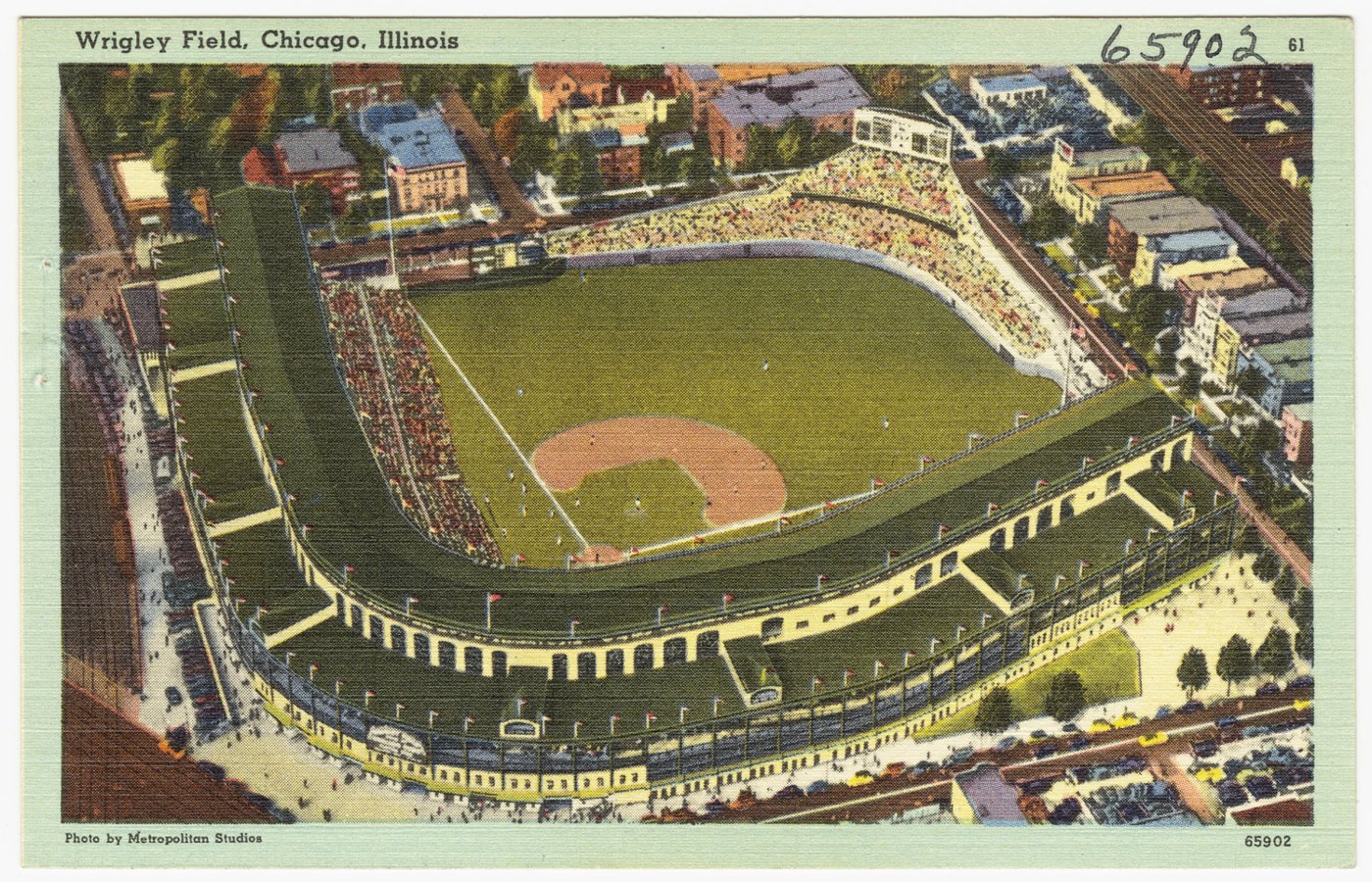
The landmark report also explains how the surrounding buildings help enclose the field. Across Waveland and Sheffield, mostly three-story masonry buildings rise behind the lower outfield walls. Their rooftop seating belongs to a different kind of urban edge from a stadium surrounded by parking. From inside, the neighborhood becomes part of the composition; from outside, the scoreboard and upper deck interrupt otherwise modest residential blocks.
The south side curves along Addison, while the west side follows the former Seminary Street right-of-way more directly. These uneven edges reflect the constraints of the site. They also make approaching the park on foot different from viewing a detached arena: the structure appears a piece at a time, through steelwork, gates, corners and adjacent streets.
The ivy story and the marquee
The ivy has acquired its own folklore. A detailed 2021 MLB account, drawing on Cubs historian Ed Hartig's research, credits horticulturist Elmer Clavey and his son Gordon. A George Brace photograph dated September 4, 1937, shows the planting. The account describes Boston ivy mixed with Japanese bittersweet to provide quicker coverage.
Bill Veeck Jr. later told a more personal planting story, but the photograph predates his claimed overnight effort. Whether he first suggested the idea remains uncertain. The useful distinction is between helping imagine a park-like setting and actually planting the wall. Bill Veeck Sr. died in 1933, four years before the planting.
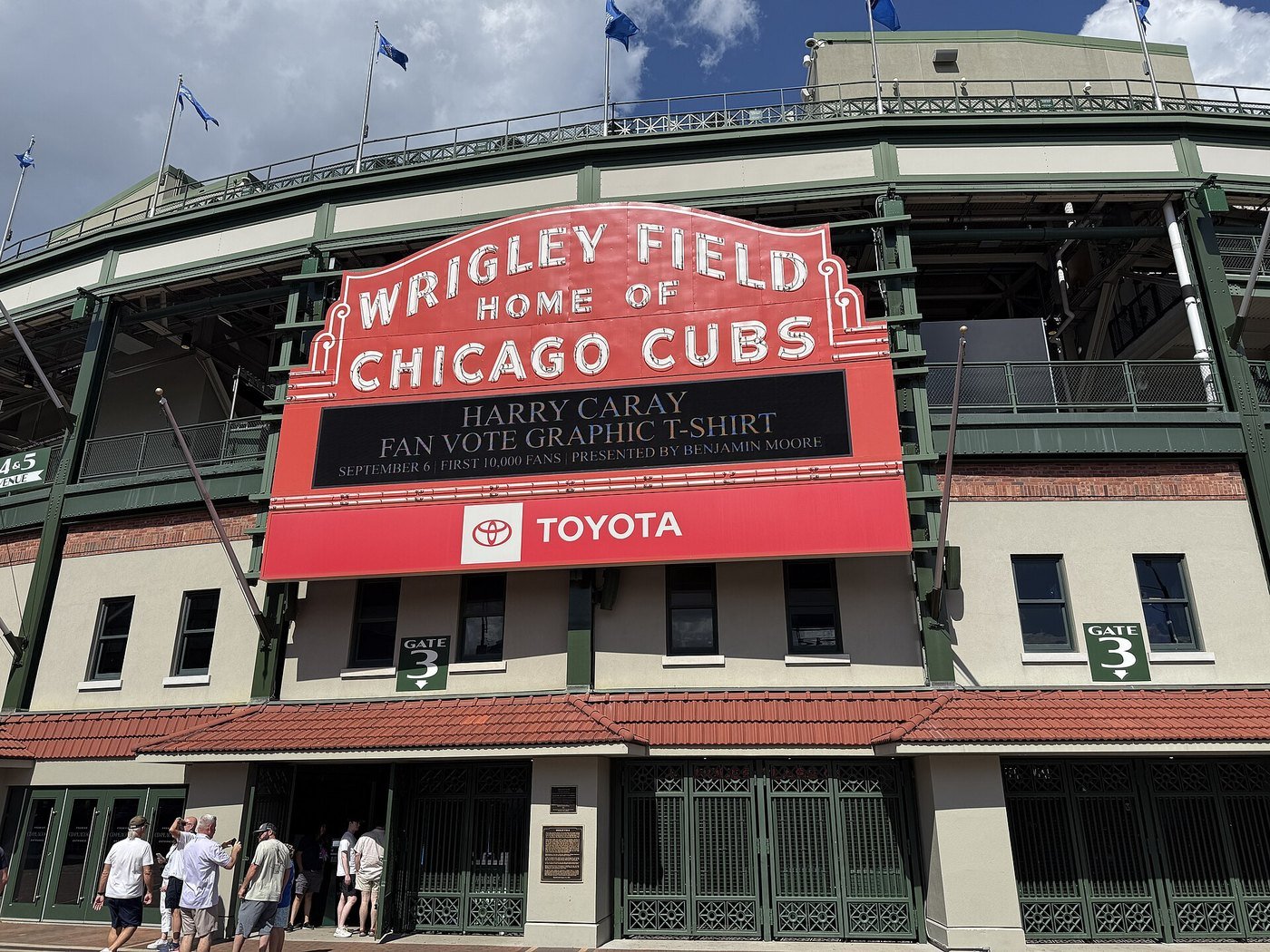
The marquee at Clark and Addison was installed in 1934. MLB's historical FAQ describes its original color as fern green with gold trim and dates the familiar red to the mid-1960s. The color most associated with the park is decades younger than the sign itself.
Afternoons, football and the first lights
For generations, afternoon baseball distinguished Wrigley from parks that had introduced lights. The Cubs were the last major-league team to install them, in 1988. The attempted first night game on August 8 was rained out in the fourth inning. The first official night game came the next evening, when Chicago beat the Mets 6-4.
The building also served sports beyond baseball. The Bears played here from 1921 through 1970 before moving to Soldier Field. Fitting football into the same site changed how spectators and players used the space, while the neighboring rooftops gradually became another distinctive way of watching baseball.
Restoration without freezing the park
The Wrigley family sold the Cubs to Tribune in 1981. The Ricketts family's 2009 purchase began another period of substantial change. The multi-year 1060 Project rebuilt and expanded facilities, added video boards, improved player and spectator spaces, and developed the west-side area associated with Gallagher Way.
The result is neither an untouched 1914 relic nor an entirely new stadium behind a historical sign. Its visible history consists of retained structures, restored details and modern insertions. The manual scoreboard, brick outfield walls and neighborhood views remain important even where equipment, seating and circulation have changed.
Wrigley became a Chicago Landmark in 2004 and a National Historic Landmark in 2020. MLB's March 2026 guide lists capacity as 41,649 and identifies it as the National League's oldest park and the majors' second-oldest, after Boston's Fenway Park. Those current figures should not be confused with the much smaller opening-day grandstand.
Movies, and a gangster photograph in the wrong park
Ferris Bueller's Day Off (1986) made Wrigley part of a teenage escape through Chicago. The American Film Institute's production history identifies the ballpark among the film's Chicago locations. Ferris, Cameron and Sloane watch a Cubs game; the location matters because it turns an ordinary afternoon crowd into a place where an absent student can briefly disappear.
Rookie of the Year (1993) also used the park for its fantasy of a child pitching for the Cubs. Film-location accounts distinguish scenes inside Wrigley from other productions' nearby rooftop views. A movie's Chicago setting alone is not evidence that every baseball scene was filmed here.
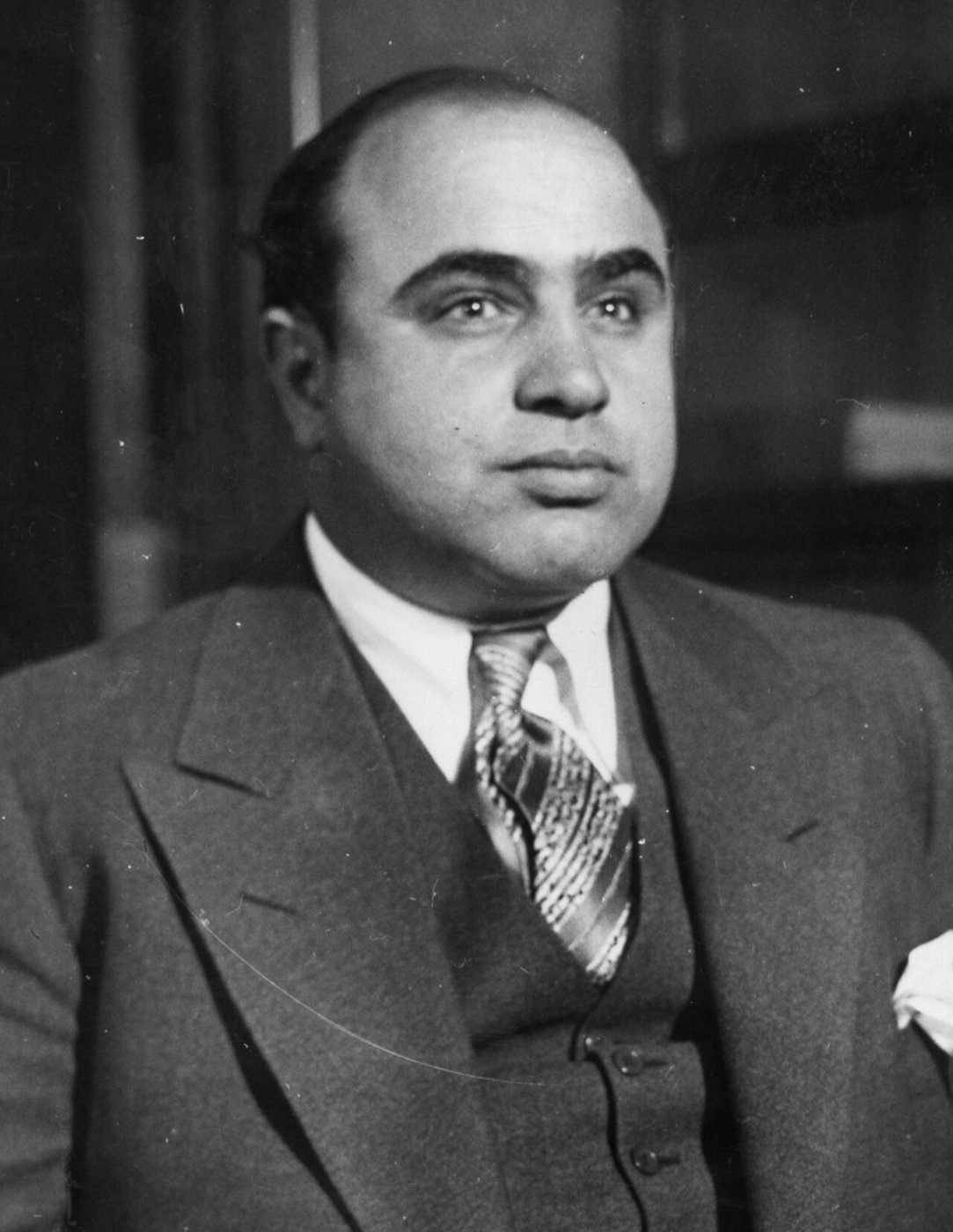
The best-known photograph of Al Capone with Cubs catcher Gabby Hartnett was not taken at Wrigley. SABR places the September 9, 1931, charity exhibition at Comiskey Park, where the White Sox hosted the Cubs for unemployment relief. Capone attended with his son Sonny. The Cubs uniform in the picture does not establish the ballpark's location.
Wrigley does have a documented place in accounts of John Dillinger's last summer. SABR's history of the June 8, 1934, Cubs-Reds game reports his attendance and likely early departure after a warning about law enforcement. The article calls him a soon-to-be Public Enemy Number One, avoiding the mistaken suggestion that he already held that FBI designation during every earlier sighting.
Who controls Wrigley Field today?
The Cubs and Wrigley Field remain under Ricketts-family control. The 2009 transaction gave the family's holding company a 95-percent interest, with Tribune retaining five percent. Tribune's January 25, 2019, announcement confirms that its remaining interest was purchased. The old five-percent figure is therefore not a current ownership description.
That does not mean every economic interest is held personally by the family. The Cubs' official ownership history says minority non-voting interests in the family holding company were sold to investors in February 2015. The family retains control while outside non-voting investors also hold economic interests. Tom Ricketts is the Cubs' chairman.
Visiting and finding a meal
Checked November 9, 2026, the Cubs' direct tour page lists guided visits lasting about 75-90 minutes. Public tours begin and end at the Gallagher Way gate on the west side. Arrive 10-15 minutes early with the required mobile ticket. Nongame-day tours may include spaces unavailable on game days, but every stop is subject to availability.
A tour ticket is not game admission, and field access does not mean walking on the grass. The operator distinguishes the warning track from the playing surface. Check the current tour calendar rather than relying on a single set of daily opening hours; weather, events and baseball operations affect the route.
Murphy's Bleachers is across Sheffield at 3655 North Sheffield Avenue. Its direct site lists bar hours of 11 a.m.-2 a.m. Sunday-Friday and 11 a.m.-3 a.m. Saturday. Those are not verified kitchen hours. For a meal before or after a tour, confirm food service separately rather than assuming the full bar schedule applies.
Sources
- Chicago landmark report: architects, construction and successive alterations
- MLB: origin of the ivy, January 2021
- MLB: Wrigley Field historical FAQ
- MLB: 2026 ballpark guide and capacity
- Official Cubs ownership history
- Tribune Media: sale of remaining interest, January 25, 2019
- Cubs: current tour details
- Wrigley Field: tour access and warning-track limits
- Murphy's Bleachers: direct hours
- AFI: Ferris Bueller production history
- SABR: Capone at Comiskey, September 9, 1931
- SABR: Dillinger and the June 8, 1934, game
- Film-location guide: Wrigley and surrounding locations