2120 South Michigan Avenue: The Little Building Where Chess Records Cut the Blues
November 3, 2026
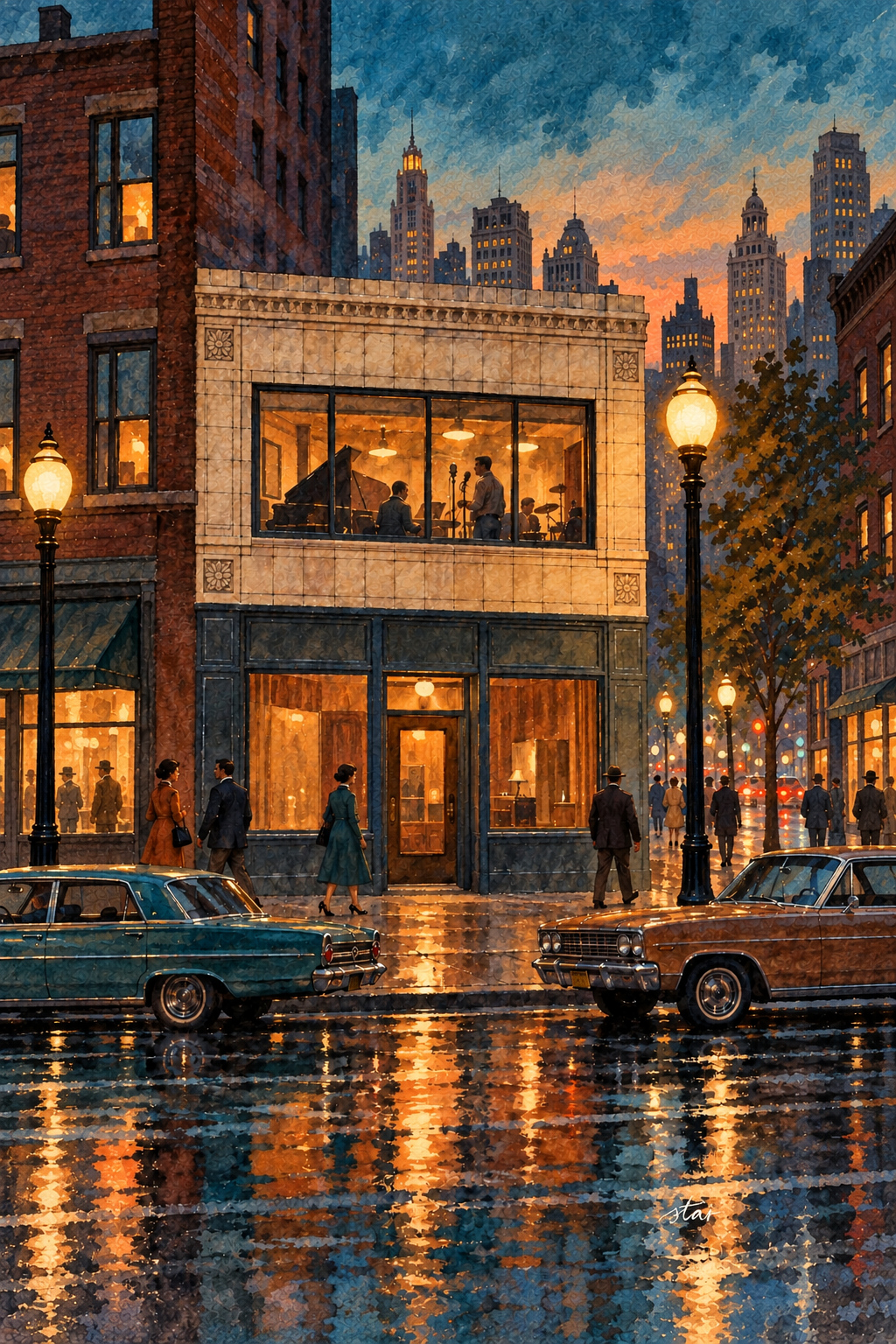
A small building with an international address
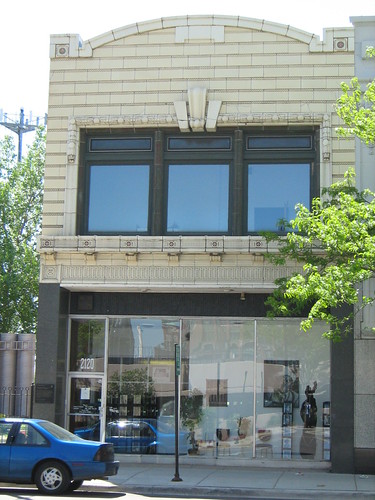
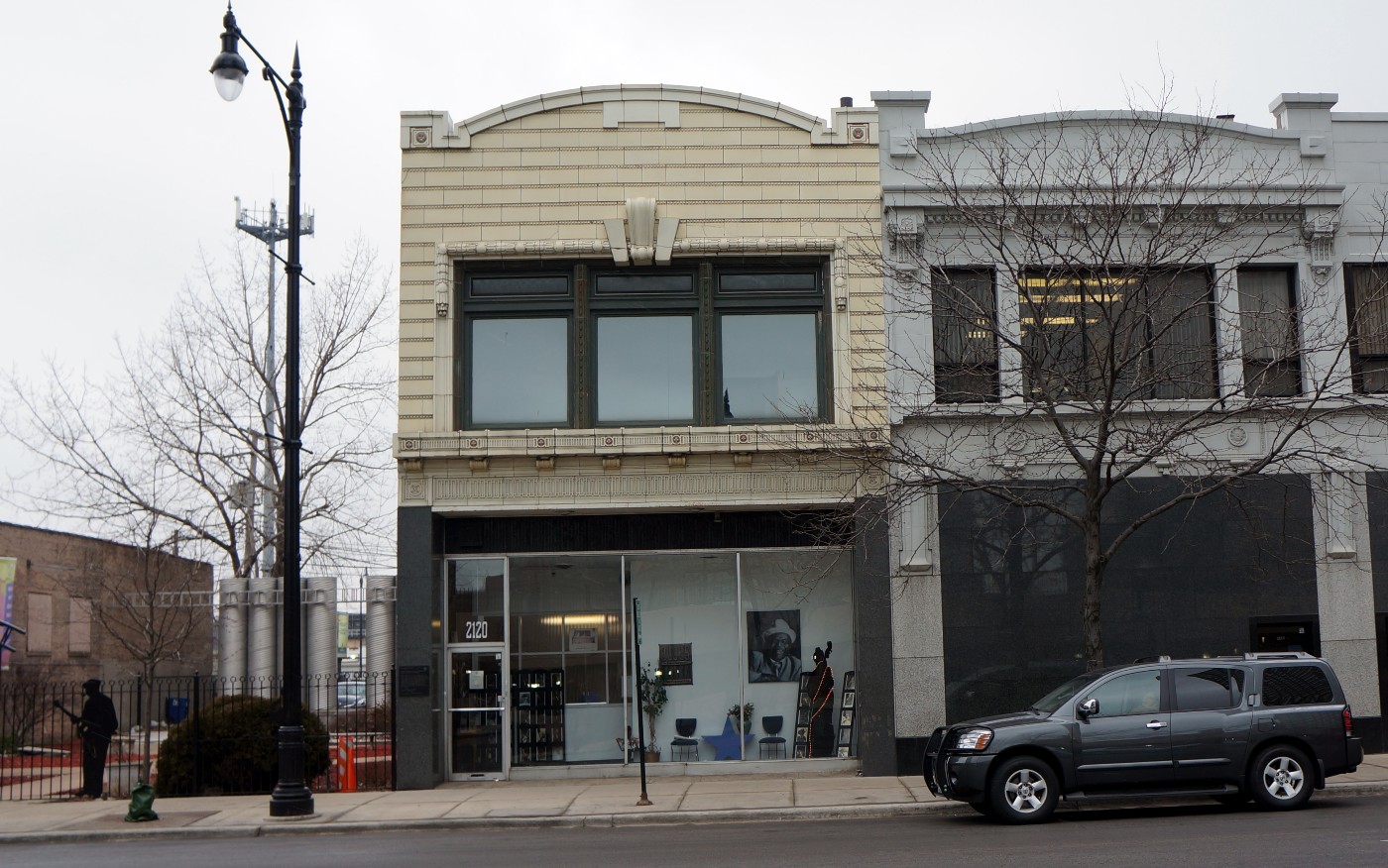
The building at 2120 South Michigan Avenue is easy to underestimate. It is a narrow two-story commercial structure, with terra cotta above a storefront that was modernized in the 1950s. Yet between 1957 and 1967, its offices and upstairs recording rooms helped send Chicago blues and rock 'n' roll around the world. Today it houses Willie Dixon's Blues Heaven Foundation, where the building's modest scale remains part of its meaning.
The address needs to be distinguished from the record label. Chess produced important records before moving here, and it continued after leaving. Not every famous Chess release was recorded at 2120. The building's achievement is substantial without placing earlier hits in the wrong studio or treating every artist in the catalogue as a witness to a particular room.
Before the records: a 1911 commercial building
Chicago's landmark report identifies the original architect as Horatio R. Wilson and dates construction to 1911. Real-estate broker Matson Hill developed the property as a commercial investment. Its twenty-five-foot frontage and party walls suited the small businesses of the district. The upper facade carried detailed architectural terra cotta, while the interior offered relatively open loft space rather than rooms designed for musical performance.
Before Chess, tenants included a furniture-slipcover manufacturer and a necktie business. This was not a purpose-built recording palace. Its later significance came from the adaptation of ordinary commercial space. Understanding that origin helps explain the contrast between the decorated upper facade and the recessed aluminum storefront through which visitors now enter the museum and foundation.
How the Chess brothers reached Michigan Avenue
Leonard and Phil Chess came from a Polish-Jewish immigrant family that settled in Chicago. Their experience running South Side taverns and nightclubs brought them into contact with musicians and audiences. The Macomba Lounge, opened in 1946, was especially important. The brothers entered the record business through Aristocrat, and the Chess name replaced that label in 1950.
Early operations depended on outside recording studios and a small staff. The city landmark report describes successive storefront offices, including premises on Cottage Grove Avenue. A makeshift studio there in 1954 did not eliminate the need to hire commercial recording facilities. The growing business needed more control over recording, administration, storage and distribution than those earlier quarters could provide.
The brothers purchased 2120 late in 1956 and moved the company there in May 1957. That chronology corrects a misleading list of supposed Michigan Avenue sessions: Chuck Berry's 1955 Maybellene and Muddy Waters's 1954 Hoochie Coochie Man predate the move. They belong to the label's history, but cannot be used as examples of recordings made in this building.
Townsend's alterations and Wiener's studio
Architect John S. Townsend Jr. designed the 1956-1957 conversion. According to the landmark report, the work included approximately $20,000 of alterations. Dark granite framed a new aluminum storefront, while ornamental glass and redwood shelves displayed records inside. The company was giving a narrow commercial building the appearance of an up-to-date music business without replacing its upper terra-cotta facade.
The floor arrangement matters. Executive offices, corridors and a shipping room occupied the first floor, with an alley door serving deliveries. Recording and rehearsal rooms occupied the second floor. This corrects the earlier description that placed the offices upstairs. A concrete-lined storage vault for recording masters was added at the rear of the upper floor, and street-facing windows were boarded over to reduce noise reaching sensitive equipment.
Engineer Jack Wiener, whose middle name was Sheldon, helped create the recording operation initially known as Sheldon Recording Studios. Research by Chuck Berry discographer Dietmar Rudolph credits Wiener with the console, room planning, equipment selection, recording and mastering. This is a different role from Townsend's architectural commission. A story that names only the Chess brothers misses much of the technical work that made the building useful.
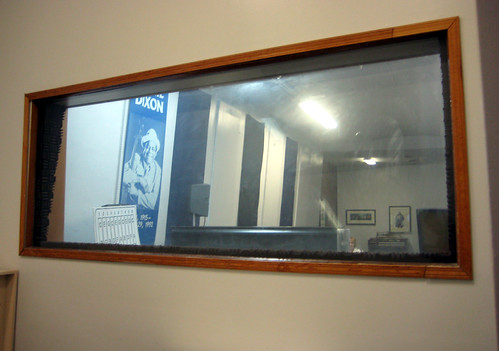
The city report records Chess taking over the studio in 1958. Malcolm Chisholm and later Ron Malo contributed engineering expertise as operations developed. Malo added dual echo chambers in the basement. Those spaces and the upstairs studio formed a working sound-making system, rather than a room whose musical character came simply from the musicians' presence or from a famous address on the door.
The people behind the records
The landmark report identifies Chuck Berry's Johnny B. Goode and Rock 'n' Roll Music among recordings made here. Bo Diddley's work, including Say Man, also belongs to the building's years. Blues artists associated with the studio included Muddy Waters, Howlin' Wolf, Sonny Boy Williamson, Little Walter, Buddy Guy, Etta James and Koko Taylor. Their different styles resist any idea that Chess produced one mechanically uniform sound.
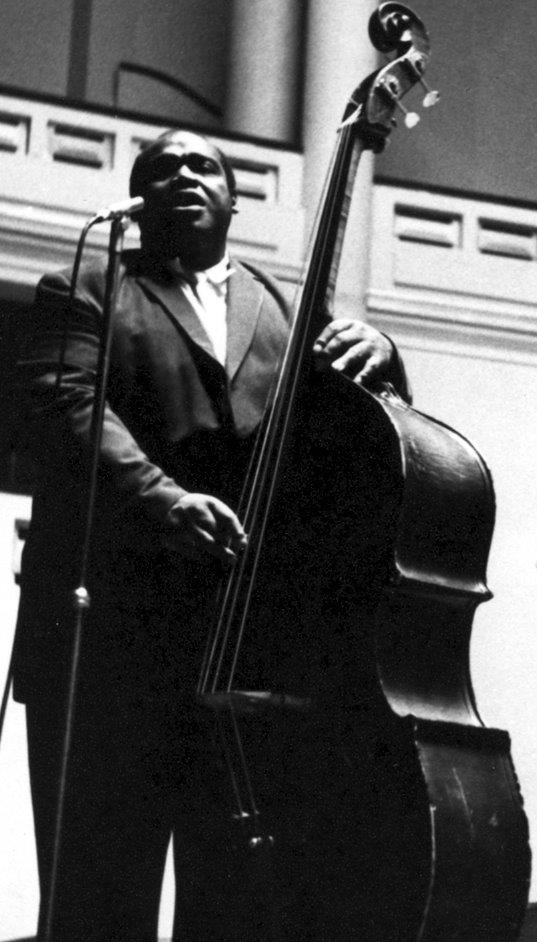
Willie Dixon was central as a songwriter, arranger, producer and musician, apart from a period working with Cobra Records. His contributions linked composition with performance and practical studio decisions. A photograph of Dixon performing in Brussels in 1963 illustrates the musician, not a session inside this building. Keeping that distinction in a caption is as important as identifying a recording date correctly.
Ralph Bass, hired as artist-and-repertoire director in 1958, encouraged an informal atmosphere during sessions. The city report describes him working in the room with musicians while engineers managed the recording. The company also recorded jazz, comedy, sermons and other material. Chess's blues reputation is deserved, but its business was broader than the few songs that now dominate popular accounts of the address.
The Rolling Stones arrive
The Rolling Stones came to record in 1964 after learning from imported records by Chess artists. Their instrumental 2120 South Michigan Avenue made the address itself part of the music. The sessions belonged to an exchange in which Black American performers had already influenced a younger British generation. The visiting band's celebrity should not push the originating musicians into the background of their own story.
A famous visitor's anecdote is not automatically a verified historical event. Stories about Muddy Waters carrying equipment or doing maintenance circulate widely, but they are not needed to establish why the Stones came. The firmer evidence is the recording work and the tribute embedded in the instrumental's title. The building was internationally known while Chess still occupied it, not only after it became a museum.
The sound also travelled beyond ordinary record sales. The landmark report notes that Chuck Berry's 1958 recording of Johnny B. Goode was selected for the Voyager spacecraft's Golden Record. That later honor connects a documented recording from this small studio with an international account of human culture. It does not make the building more architecturally elaborate, but it helps explain why a plain storefront deserved preservation alongside Chicago's much larger monuments.
After Chess left
Chess purchased larger premises at 320 East 21st Street in 1966. The transition extended into early 1967, with limited operations continuing at 2120 during the move. Leonard and Phil sold the record business to General Recorded Tape in 1969, and Leonard died that October. Neither the later corporate history nor later recording facilities should be folded into the ten-year Michigan Avenue chapter.
The Sammy Dyer School of the Theater adapted the building for dance and theatrical use in 1969. In 1980, former Chess musician Gerald Sims acquired it and re-equipped the second floor as a recording studio. The landmark report documents those intervening uses, an important reminder that the current museum did not inherit an untouched studio immediately after the last Chess session.
Chicago designated the building a landmark on May 16, 1990. Marie Dixon purchased it in 1993 after Willie Dixon's death and undertook restoration. The foundation's own history says it reopened with a dedication in September 1997 and that she donated the building to Blues Heaven. The HistoryMakers' biography independently records her leadership and the family's work in bringing the foundation into the restored property.
Who owns and uses 2120 today?
Willie Dixon's Blues Heaven Foundation identifies the building as its home and describes Marie Dixon's donation. That is the source for the foundation's ownership history; a fresh title examination was not part of this review. The nonprofit preserves blues history, provides educational programs and supports musicians. Ownership of the building must not be confused with control of the separate Chess record catalogue.
Nor is a film about Chess proof of filming here. Cadillac Records dramatizes parts of the label's story, but Vanity Fair's contemporary production report describes a Jersey City set. That evidence does not establish a shoot at 2120. No verified on-site movie production or organized-crime connection was established in this review, so neither has been added as a decorative historical claim.
Visiting and eating nearby
The address is 2120 South Michigan Avenue. On November 9, 2026, the foundation homepage required reservations for available Tuesday-Saturday tours between noon and 4 p.m., listing $30 adult admission and $25 for students aged 5-17 and seniors aged 65 and over. It announced a winter and restoration closure beginning November 25, with regular tours resuming March 2, 2027. Obtain confirmation before travelling; generic business hours are not a tour reservation.
The contact page separately lists later Wednesday-Saturday hours, so the tour notice and an actual booking confirmation take priority over assuming a walk-in visit. CTA's 3 King Drive route serves Michigan Avenue in the area; check the official stop and service information. North of the museum, the Chicago Firehouse Restaurant at 1401 South Michigan lists dining-room hours Monday-Thursday 4-10 p.m., Friday-Saturday 3-10 p.m. and Sunday 3-9 p.m., checked November 9, 2026. It is a separate restaurant, not part of the foundation.
Sources
- City of Chicago: Chess Records landmark details
- City of Chicago: landmark report, building plans and studio history (PDF)
- Chess Records: label chronology
- Dietmar Rudolph: Jack Wiener and Sheldon Recording Studios (2018)
- Blues Heaven Foundation: history, Marie Dixon and the building
- The HistoryMakers: Marie Dixon biography
- Blues Heaven Foundation: tour notice, admission and winter closure
- Blues Heaven Foundation: contact and reservation requirements
- Vanity Fair: contemporary Cadillac Records production report (2008)
- CTA: 3 King Drive
- Chicago Firehouse Restaurant: address and hours