The Drake Hotel: A Century at the Top of the Magnificent Mile
November 2, 2026
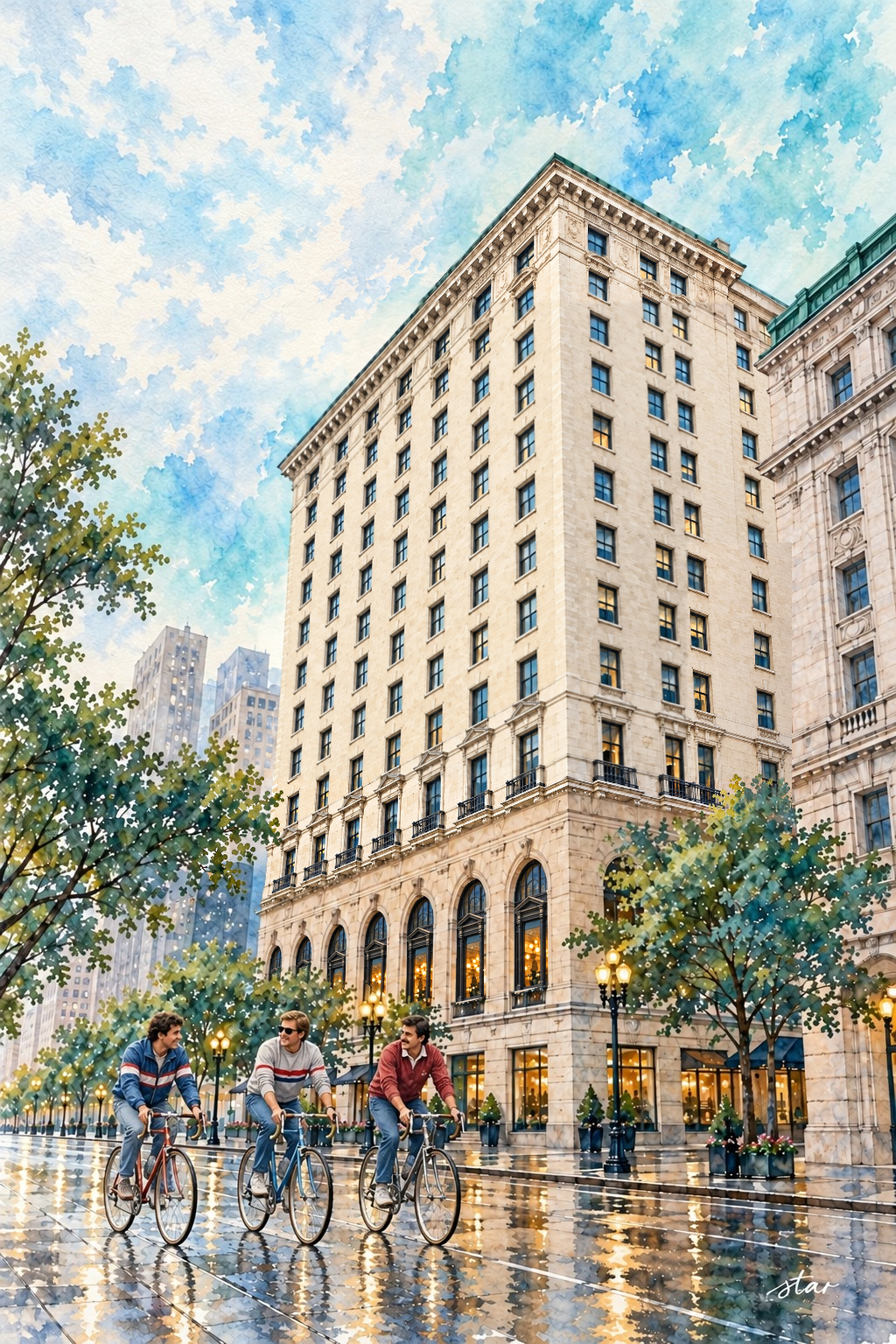
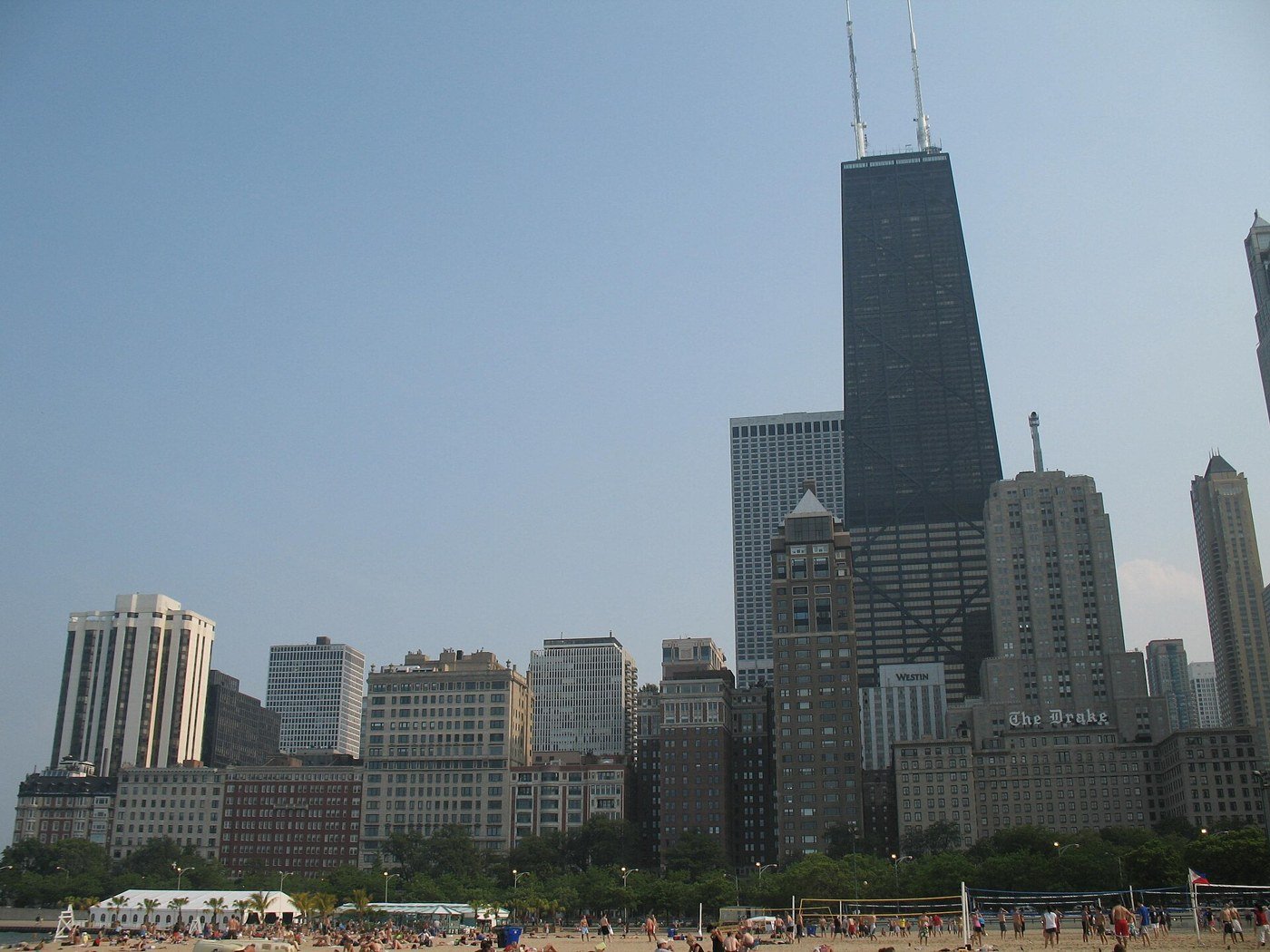
The Drake Hotel opened on New Year's Eve 1920, welcoming two thousand guests to a new address at the meeting of Michigan Avenue and the lakefront. Its broad limestone facade still marks the northern end of the Magnificent Mile. Behind it, tea rooms, ballrooms and layered staircases preserve the idea of a hotel as a place to appear in public, not simply somewhere to sleep.
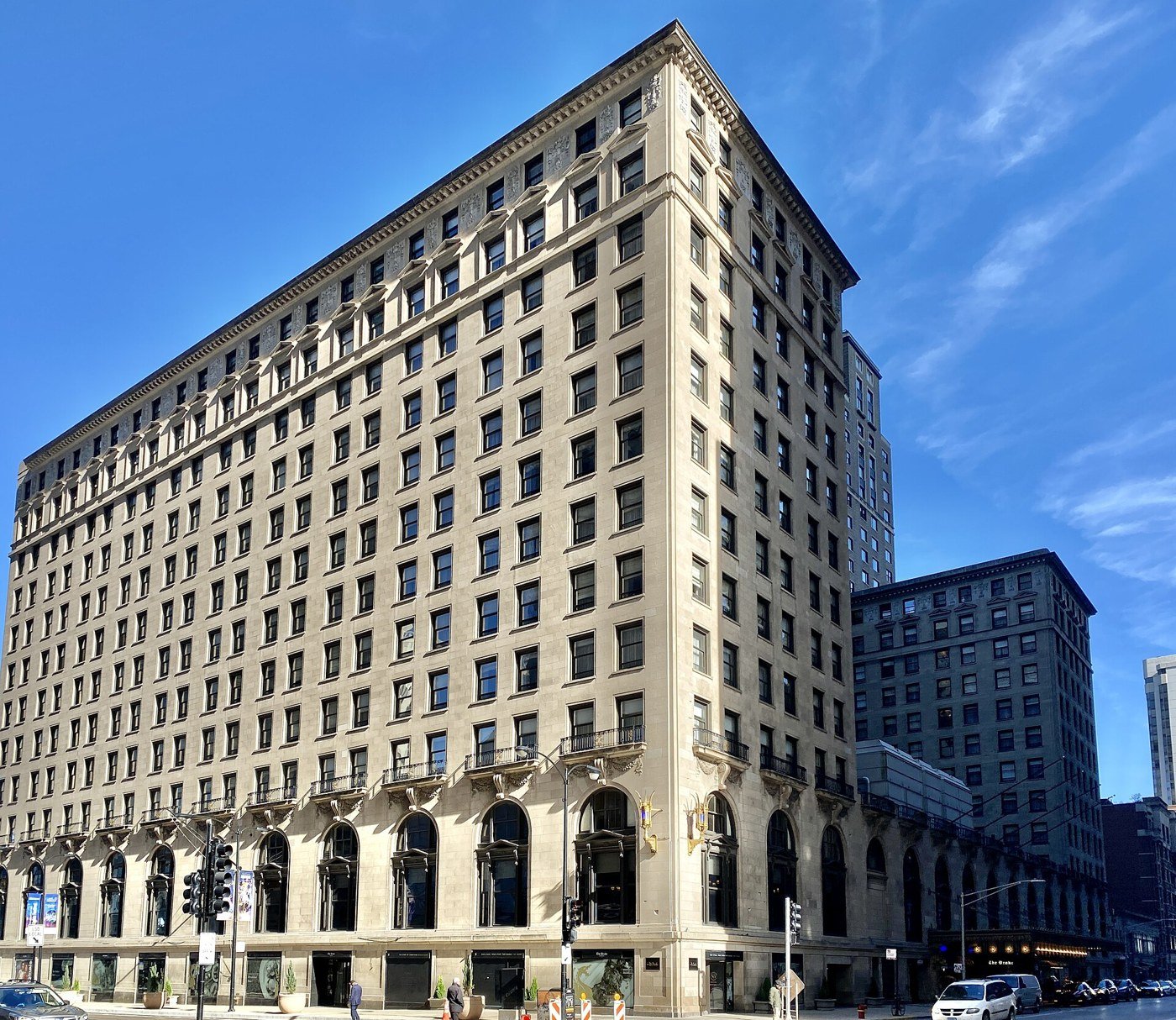
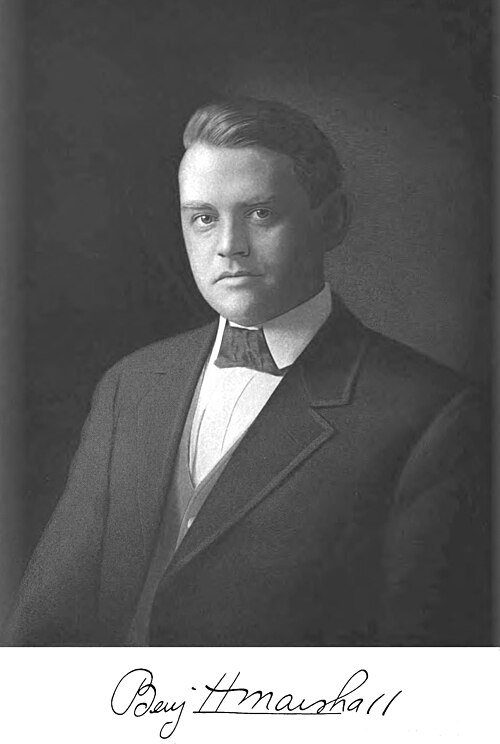
Brothers John B. Drake and Tracy Corey Drake financed the project in 1919. Their architects, Benjamin Marshall and Charles Eli Fox, gave it the formal presence of an Italian Renaissance palace. The resulting building belongs both to the commercial avenue and to the residential architecture of East Lake Shore Drive.
Marshall and Fox's lakefront palace
The Chicago landmark report for the East Lake Shore Drive District describes a thirteen-story building faced in smooth gray limestone. Its balanced composition and restrained decoration draw on palaces in Rome and Florence. Instead of relying on a narrow tower, the Drake presents a substantial horizontal mass to the lake and adjoining streets.
That scale was appropriate to a hotel containing public rooms as well as private bedrooms. The district report identifies a piano nobile, the principal ceremonial level of a palace. On the lakefront elevation, columns and pilasters frame the long windows of the grand ballroom. The treatment makes the public room legible on the exterior: these are not simply another row of ordinary guest windows.
The surrounding district developed during the first three decades of the twentieth century. Its apartment buildings offered wealthy residents the space and service of a large house in a high-rise setting. The Drake adapted that social ambition to a hotel, with views of beach, park and lake and a location close to shopping and business.
Seen in that setting, the hotel is more than the familiar sign over Michigan Avenue. Its broad facades help define a group of buildings with related proportions and classical details. The district report treats their shared architectural language as part of the significance of the whole street, rather than describing each property as an isolated monument.
Opening night and a changing avenue
The hotel's own history dates the opening to December 31, 1920. The 1920 postcard shows the new building before later towers changed its surroundings. Such promotional views record how a hotel wanted to present itself as well as the appearance of the streets: they are not neutral measurements of every architectural detail.
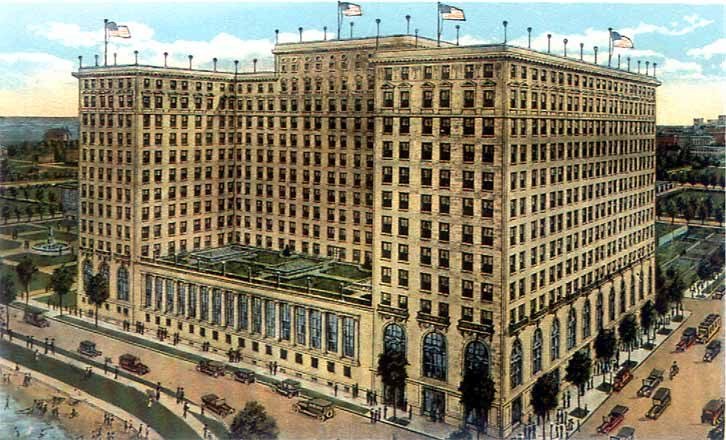
The Drake's position put it between an established lakefront neighborhood and an avenue becoming a major destination. Its public rooms offered places for residents and travelers to meet. The hotel remembers visitors including Bing Crosby, Walt Disney, George Gershwin and Charles Lindbergh, whose names became part of its account of Chicago society.
In 1940 the hotel's illuminated sign added another kind of identity, readable at skyline scale. The stone building could suggest continuity with older European palaces while electric lettering announced a modern commercial address. Those two registers, formal architecture and conspicuous hospitality, still coexist.
Radio above the ballroom
The Drake also helped bring Chicago entertainment into people's homes. WGN's own timeline traces the story back to WDAP, which began broadcasting from the Wrigley Building in 1922. After a tornado damaged its antenna that July, the station moved into two handball courts on top of the Drake.
With only one microphone, a broadcast of dance music could involve carrying the equipment downstairs to Jack Chapman's orchestra. WGN's history recalls the practical improvisation behind what listeners heard as a continuous program. Hotel musicians were no longer performing only for the people in the room.
The Tribune's radio interests and call letters went through several changes in 1924. On June 1, WGN took over WDAP's studios and programs. The Drake's broadcasting connection therefore began two years before the Tribune takeover.
Palm Court and the Cape Cod Room
The Fountain Court, later called Palm Court, became a setting for afternoon tea. The hotel's centennial interview with WBBM describes the staircases as part of a deliberate social procession: guests entered, climbed and presented themselves to society. Circulation was an experience in its own right, not merely the shortest route between floors.
Royal visits reinforced that public identity. In WBBM's 2021 account, manager Leticia Phocus read from a preserved autograph book recording Queen Elizabeth in July 1959, Prince Philip in 1966, Grace of Monaco in 1977 and other visitors. Princess Diana's 1996 Chicago stay became another enduring part of the hotel's story.
The hotel recalls earlier seasonal changes to Palm Court: a heavy fireplace replaced the fountain in winter, while an open ceiling admitted lake breezes in summer. These are historical arrangements, not promises about the room today.
The Cape Cod Room offered a different atmosphere, with wood paneling and seafood rather than the ceremonious setting of tea. The hotel's history dates it to 1932; contemporary closure reports give 1933. Its final dinner service was New Year's Eve 2016, with permanent closure announced for January 1, 2017.
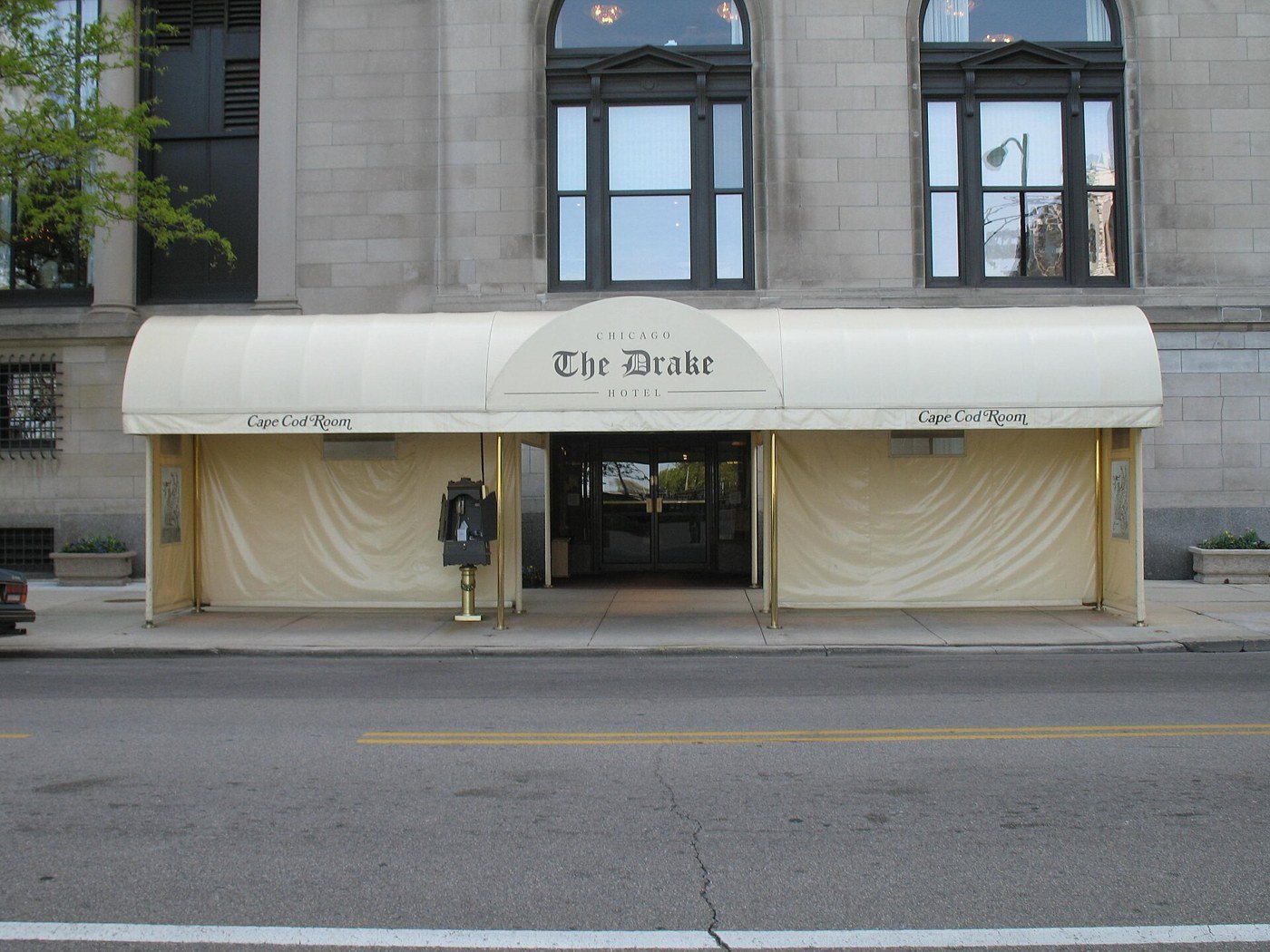
Marilyn Monroe and Joe DiMaggio's initials, carved into the wooden bar during their 1954 visit, became a much-repeated attraction. The closure announcement said the bar and other memorabilia would be preserved. The photograph above records its entrance and awning in 2007, not an interior dining room or a restaurant available to book today.
Coq d'Or and the end of Prohibition
Coq d'Or opened on December 6, 1933, the day after national Prohibition ended. The hotel describes it as the second Chicago establishment to receive a liquor license. Its wood-lined bar and long operating history make it a more intimate counterpart to the ballrooms upstairs.
Some Cape Cod traditions continued elsewhere in the hotel after that restaurant closed. Coq d'Or's current menu story includes Bookbinder's red snapper soup, served at the Drake since the 1930s, and its Executive Pour Martini with a chilled sidecar. These continuities do not mean the former Cape Cod Room itself reopened.
Frank Nitti and a concealed doorway
The hotel's underworld connection is more specific than a general claim that every famous gangster stayed here. In Lisa Fielding's WBBM centennial report, Phocus said Frank Nitti once had an office at the Drake. A bookcase concealed a doorway, with a passage leading toward the Grand Ballroom.
Phocus told WBBM that the Secret Service rediscovered the door during preparations for a visit by President Barack Obama. That is an attributed account from a hotel manager, not an independently reconstructed chronology of Nitti's use of the room. It supports the office and doorway story without establishing a particular suite number or every year of occupancy.
Ownership, management and preservation
The National Park Service records the Drake's addition to the National Register of Historic Places on May 8, 1980. National Register listing should not be confused with the separate National Historic Landmark designation. The hotel also forms part of Chicago's East Lake Shore Drive landmark district.
The hotel's history says Hilton International acquired the Drake in 1980. More recent property sources distinguish management from ownership. Phillips Martin's current partner biographies identify James McGinn and Stanley Brashears as general partners of BB&A Venture, described there as the hotel's owner. They also record National Realty's earlier involvement and a reversionary ground lease executed in 1979.
When JLL marketed the 535-room property in August 2021, its account described four tenant-in-common entities, with the two sellers together controlling a 90 percent fee-simple interest. Bloomberg and The Real Deal identified the Brashears family and Acore Capital as the principal interests. The reported asking expectation of more than $250 million was not a completed sale price.
The current Phillips Martin biographies provide a more useful ownership lead than the Hilton name alone. They do not supply a new title report, current percentages for every investor or a complete account of the earlier ground lease's termination. Hilton branding and hotel management should therefore be distinguished from the precise legal interests in the real estate.
The Drake on film
In Risky Business (1983), Tom Cruise's Joel appears outside the Drake. Its Filmed There identifies the hotel exterior among the film's Chicago locations. In What Women Want (2000), the same guide identifies the Drake as Alex's prom location, at about one hour and fifty-two minutes.
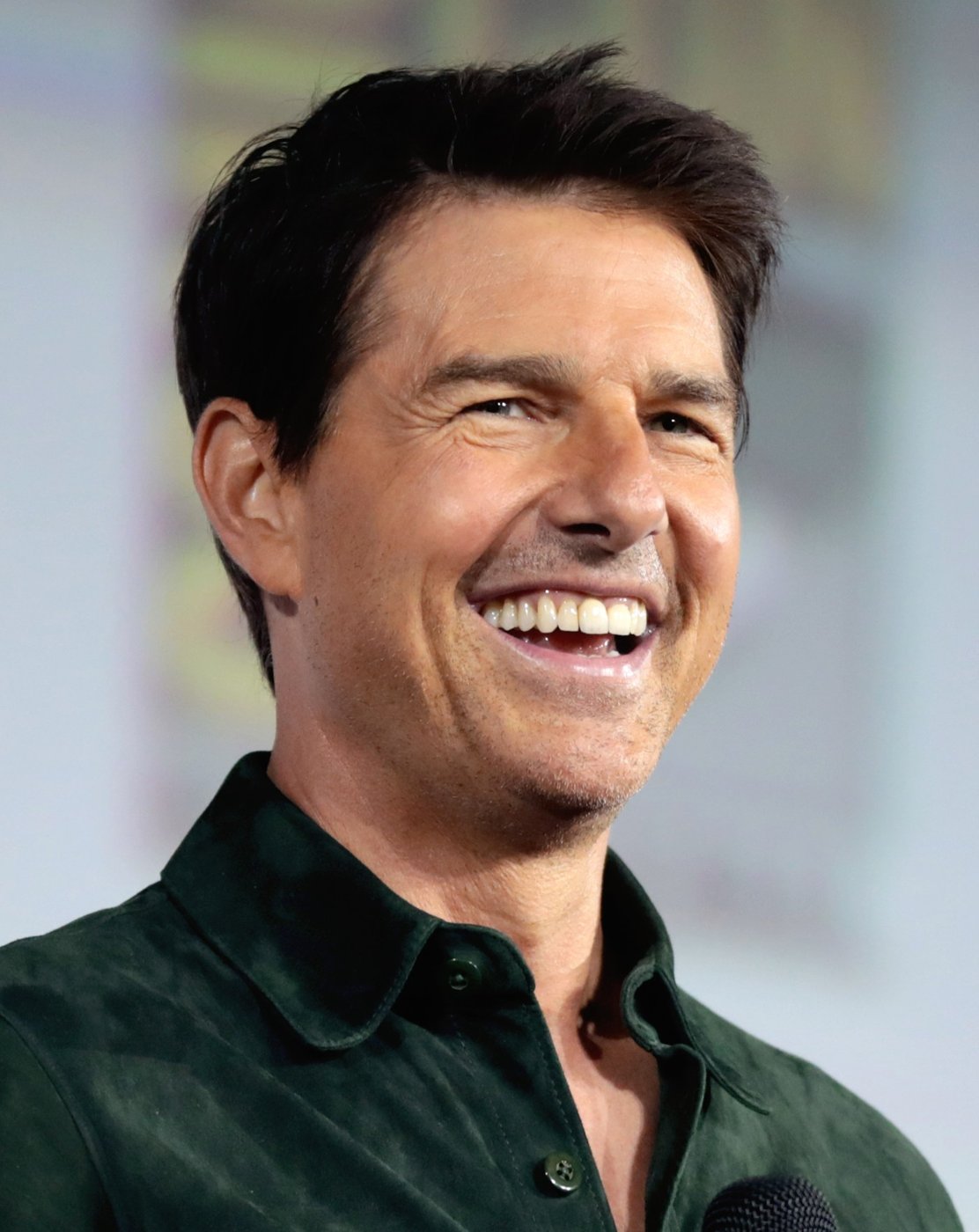
Chicago Movie Tours also identifies the Drake among the locations in Clint Eastwood's Flags of Our Fathers (2006), alongside Union Station, Soldier Field and other Chicago-area sites. These are particular location connections, not claims that entire films were made inside the hotel. The portrait above shows Cruise in 2019, not during filming in 1983.
Visiting, tea and a meal today
The hotel is at 140 East Walton Place. Its restaurants welcome visitors as well as overnight guests, but a meal reservation does not grant access to private guest floors or event rooms.
Checked November 9, 2026, Coq d'Or lists Monday-Thursday 11 a.m.-midnight, Friday-Saturday 11 a.m.-1 a.m., and Sunday 11 a.m.-11 p.m. Kitchen last calls are earlier: 10 p.m. Monday-Thursday and Sunday, 11 p.m. Friday-Saturday. It takes walk-ins rather than reservations, with seating first come, first served.
Palm Court recommends reservations and limits full tea service to ninety minutes. Its dated holiday schedule overrides the regular Friday-Sunday listing: November 5-21 has Thursday-Sunday seatings from noon to 4:30 p.m.; November 22-January 10 has daily seatings from 11 a.m. to 4:30 p.m. The hotel also advertises separate Festival of Lights tea on November 21. Check the dated calendar before choosing a visit.
Sources
- The Drake: hotel history
- East Lake Shore Drive designation report: excerpts and architectural context
- National Park Service: National Register entry
- WGN: station timeline and Drake studios
- WBBM: centennial interview, autograph book and Nitti doorway
- Chicago Sun-Times: Cape Cod Room closing announcement
- Phillips Martin: current partners and BB&A Venture
- Connect CRE: JLL 2021 ownership and sale offering
- The Real Deal: 2021 offering and Hilton management
- Its Filmed There: Risky Business
- Its Filmed There: What Women Want
- Chicago Movie Tours: Flags of Our Fathers
- The Drake: current Coq d'Or hours and walk-in policy
- The Drake: Palm Court holiday tea schedule